
EU Rule Triggers New Safety Certification for Laser Welding Imports
From August 1, 2026, industrial laser welding equipment entering the EU market will need to comply with EN 60204-1:2025+A1:2026, following a new implementation decision published in the Official Journal of the European Union on July 23, 2026. The change matters not only to equipment manufacturers and exporters, but also to buyers, certification-related service providers, and delivery teams, because it directly affects CE compliance preparation, technical documentation, and shipment timing for handheld systems, robot-integrated units, and workstation-based equipment.
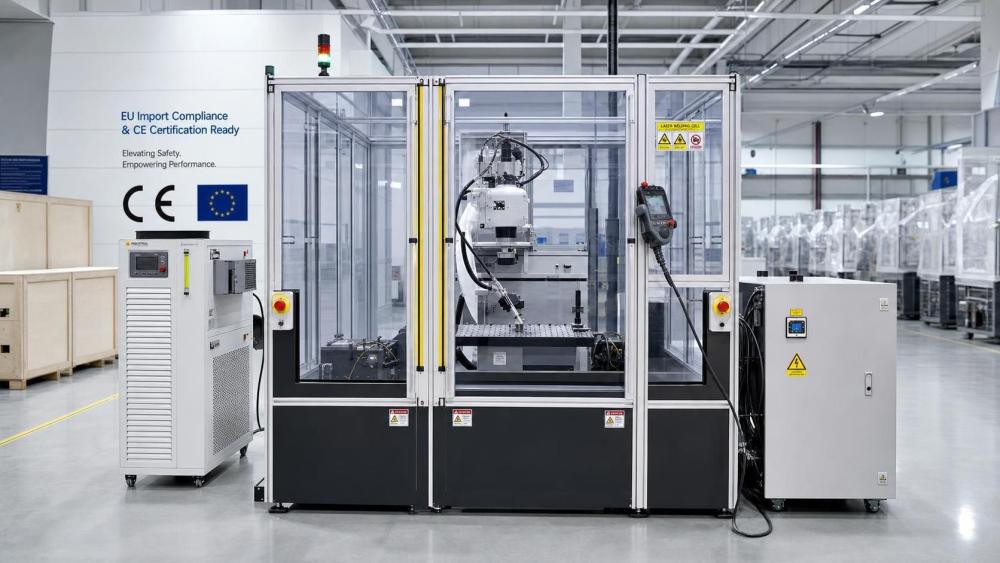
What the New Requirement Formally Changes
According to the provided event information, OJEU published Implementing Decision (EU) 2026/1487 on July 23, 2026. The decision makes compliance with the updated machinery safety standard EN 60204-1:2025+A1:2026 mandatory for all industrial laser welding equipment imported into the EU market from August 1, 2026.
The scope expressly covers handheld laser welding equipment, robot-integrated laser welding equipment, and workstation systems. The update highlighted in the event summary strengthens three areas: laser protection interlock response time, which must be no more than 100 ms; redundant emergency-stop circuit design; and failure mode analysis requirements for multi-axis coordinated control.
The provided information also states that the rule directly affects the CE compliance path and delivery cycle of Chinese exporters.
Where the Pressure Is Likely to Appear First
Export shipments now face a tighter compliance gate
From an industry perspective, exporters of laser welding equipment are likely to feel the immediate impact because the rule is framed as a market-entry requirement from a fixed date. The practical pressure point is not only product design itself, but also whether the equipment can be presented with documentation and certification work aligned to the updated standard before shipment and market placement.
Equipment manufacturers may need closer coordination between design and certification work
Analysis shows that manufacturers supplying handheld units, robot-integrated equipment, or workstation systems should pay particular attention to the technical areas specifically reinforced by the new standard: interlock response, emergency-stop redundancy, and failure mode analysis for coordinated multi-axis control. These are the areas most likely to affect engineering review, conformity assessment preparation, and the supporting technical file used in CE-related processes.
Buyers and procurement teams may need to revisit supplier qualification checks
For EU-facing procurement activity, the main issue is whether incoming equipment can still be accepted on the original delivery schedule once the updated certification requirement applies. What deserves closer attention is supplier readiness: whether technical specifications, compliance statements, and certification-related materials are aligned with EN 60204-1:2025+A1:2026 rather than older assumptions used in sourcing or bid review.
Testing and certification service participants may see heavier document and review demands
Observably, certification-related firms and testing service providers may be drawn more deeply into pre-delivery review because the rule change is linked to CE compliance pathways. The likely business impact is greater attention to design records, safety function evidence, and control-system analysis materials tied to the newly emphasized requirements.
What Companies Should Be Checking Now
Review whether current CE compliance files map to the updated standard
Analysis shows that companies should first examine whether their existing compliance route for laser welding equipment actually reflects EN 60204-1:2025+A1:2026. This is especially relevant where technical files, declarations, test references, or customer submission packages were built around earlier standard assumptions.
Recheck technical documentation around the three reinforced safety points
What deserves closer attention is whether supporting materials clearly address the maximum 100 ms interlock response time, redundant emergency-stop circuit design, and failure mode analysis for multi-axis coordinated control. Even where product architecture is unchanged, document sufficiency can become a separate issue once the required standard basis changes.
Reassess delivery planning for EU-bound orders
From an industry perspective, the rule should be read as a trigger for checking order sequencing, shipment timing, and customer acceptance conditions for EU-bound equipment. Because the provided information states that delivery cycles may be affected, companies should watch for delays linked to compliance review, revised document requests, or additional certification steps, while avoiding assumptions about exact enforcement practice that have not yet been provided.
Watch for changes in tender language and customer-side specification alignment
It is more appropriate to understand this as a compliance change that can also flow into commercial documentation. Companies involved in quotations, tenders, or distributor supply arrangements should therefore monitor whether buyers begin referencing EN 60204-1:2025+A1:2026 directly in technical specifications, qualification checklists, or acceptance conditions.
How This Should Be Read at This Stage
Observably, this is better understood as an implemented rule change rather than a distant policy signal, because the event information provides both an official publication date and an effective date. At the same time, analysis shows that the market still needs to watch how the requirement is reflected in certification practice, procurement documentation, and day-to-day compliance review, since those execution details were not included in the provided input.
From an industry perspective, the most important point is not that a safety rule has changed in general terms, but that specific technical requirements now sit closer to the commercial path of exporting and delivering laser welding equipment into the EU market. That makes this relevant across engineering, compliance, sales support, and supply coordination functions.
Why the Update Matters Beyond the Headline
This development signals a concrete tightening of market-entry conditions for industrial laser welding equipment sold into the EU. The immediate meaning is clear: compliance with EN 60204-1:2025+A1:2026 becomes part of the practical entry threshold from August 1, 2026. The broader market effect still needs observation, but for affected companies this is already a rule change that should be treated as an active compliance and delivery issue rather than as background policy noise.
Basis of This Article and What Still Needs Verification
This article is based on the user-provided news title, event date, and event summary. For this type of development, relevant source categories usually include official notices, regulator publications, trade or customs authority updates, industry association releases, standards organization documents, and reporting by established industry media.
No direct official source link was provided in the input, so the specific official link still needs to be verified on an ongoing basis. Observably, further attention should remain on detailed implementation language, certification interpretation, tender document updates, market feedback, and how affected companies carry the requirement into actual export and delivery practice.