
Aerospace Rivets: Strength Grades and Failure Risks Explained
In aerospace manufacturing, aerospace rivets are not minor joining parts. They are load paths, fatigue initiators, and compliance checkpoints packed into a few grams of metal.
When one rivet is under-filled, over-driven, mismatched, or poorly inspected, the risk rarely stays local. It can spread into crack growth, seal failure, vibration damage, and costly rework.
That is why strength grades and failure risks deserve close attention. In high-end manufacturing, structural fasteners sit in the same reliability chain as cutting accuracy, torque control, and welding quality.
Why aerospace rivets still matter in advanced assembly
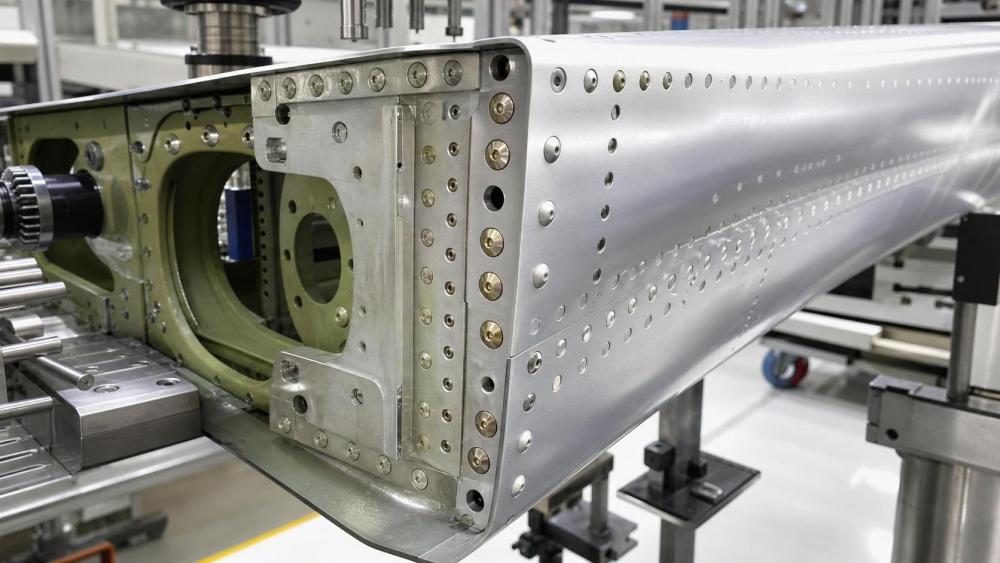
Aircraft structures combine thin skins, frames, longerons, and mixed-material subassemblies. Many of these joints still rely on aerospace rivets because they distribute load predictably and support durable mechanical fastening.
Compared with some welded joints, riveted connections can better suit heat-sensitive sections. They also simplify inspection logic in places where local thermal distortion is unacceptable.
This fits the broader HTWS view of modern industry. Structural integrity depends on how fastening, machining, torque delivery, and material behavior work together, not as isolated process islands.
For that reason, aerospace rivets are best assessed as part of a manufacturing system. Hole quality, tool condition, installation force, and traceability all shape final joint performance.
What strength grades really mean
Strength grades describe more than simple hardness. In practice, they reflect how a rivet behaves under shear, tension, clamp-up demand, and repeated cyclic loading.
A higher-strength rivet is not automatically the better choice. If the surrounding sheet is softer, or the hole quality is inconsistent, excessive strength can shift failure into the structure.
Material family also matters. Aluminum, titanium, Monel, and steel rivets differ in corrosion behavior, weight, formability, and compatibility with parent materials.
In aerospace programs, strength selection usually balances five variables: design load, material stack-up, environmental exposure, fatigue target, and installation method.
Common selection factors
Where failure risks begin
Most aerospace rivets do not fail because the catalog rating was wrong. Failures usually begin upstream, during hole preparation, tool setup, batch control, or installation consistency.
A burr, slight ovality, or poor countersink geometry may seem small. Under vibration and pressure cycling, those defects become stress concentrators.
The same applies to installation energy. Too little force can leave a loose joint. Too much force can thin the sheet, distort the head, or create residual stress that shortens fatigue life.
Failure modes worth tracking closely
- Shear failure caused by overload, weak material choice, or poor edge distance.
- Tension pull-out in thin skins where grip length or head formation is incorrect.
- Fatigue cracking around holes due to fretting, vibration, and local stress peaks.
- Corrosion-assisted damage in mixed-metal assemblies or poorly sealed environments.
- Installation defects such as tipped heads, smoking rivets, and incomplete set formation.
Among these, fatigue is often the hardest to catch early. A joint may pass initial dimensional checks and still contain the conditions that support crack growth later.
Why current industry attention is increasing
The attention on aerospace rivets is rising for practical reasons. Airframes use lighter materials, thinner sections, and more complex mixed-material architectures than many legacy platforms.
At the same time, production lines are under pressure to increase throughput without losing traceability. That makes fastener quality control more data-driven than before.
Another factor is process integration. Precision drilling, cutter wear, smart torque tools, and automated joining systems now influence rivet outcomes more directly.
This is where cross-process intelligence becomes useful. HTWS has long emphasized the link between machining quality, fastening behavior, and lifecycle strength, especially in high-spec manufacturing environments.
Inspection points that improve decision quality
Inspection should not stop at visible head appearance. Reliable evaluation of aerospace rivets combines geometry, process records, material traceability, and service-risk context.
In actual operations, a simple checklist often performs better than scattered subjective judgments.
Practical checkpoints
- Confirm hole diameter, roundness, burr condition, and countersink consistency before installation.
- Verify rivet alloy, temper, finish, and lot records against the approved build standard.
- Check grip length and upset dimensions against drawing and process limits.
- Review tool calibration, squeeze force, and maintenance records for drift.
- Flag recurring local defects by station, operator, batch, or tooling set.
- Use targeted NDT where fatigue-sensitive zones or hidden joints justify deeper verification.
When these checkpoints are linked, recurring defect patterns become easier to isolate. That is often more valuable than increasing final inspection volume alone.
How aerospace rivets fit different assembly scenarios
Not every joint asks for the same rivet behavior. Selection logic changes across fuselage skins, wing panels, access covers, brackets, and repair zones.
The table below shows why context matters more than generic fastener preference.
This scenario view helps avoid a common mistake: applying one fastener rule to every structure, regardless of load path or operating environment.
Reducing hidden risk across the process chain
Aerospace rivets perform best when upstream processes stay under control. Rivet quality is influenced by drilling tools, machine rigidity, surface condition, and installation equipment behavior.
For example, worn cutting tools can raise heat, burr formation, and hole inconsistency. Unstable pneumatic or electric riveting tools can shift force delivery from one station to another.
That is why advanced manufacturers increasingly connect fastener inspection with tooling data, maintenance logs, and digital traceability. The goal is not more paperwork. The goal is earlier signal capture.
In broader industrial terms, this mirrors what HTWS tracks across fastening, precision machining, and intelligent assembly: strength failures often begin as process variation, not as dramatic final-stage events.
A useful next step for evaluation
A good next move is to review aerospace rivets through three lenses at once: design intent, installation stability, and inspection evidence.
If a joint is safety-critical, compare strength grade assumptions with actual hole quality, tool capability, and field exposure conditions. That often reveals gaps hidden by pass-only inspection logic.
It also helps to rank joints by fatigue sensitivity and corrosion risk, then refine control plans around the highest-consequence locations first.
In the end, aerospace rivets reward disciplined judgment. The most reliable assemblies come from treating every fastener as part of a larger structural and manufacturing system.