
Fatigue Resistant Structural Fastening Engineering: Key Failure Risks
Fatigue Resistant Structural Fastening Engineering: Key Failure Risks
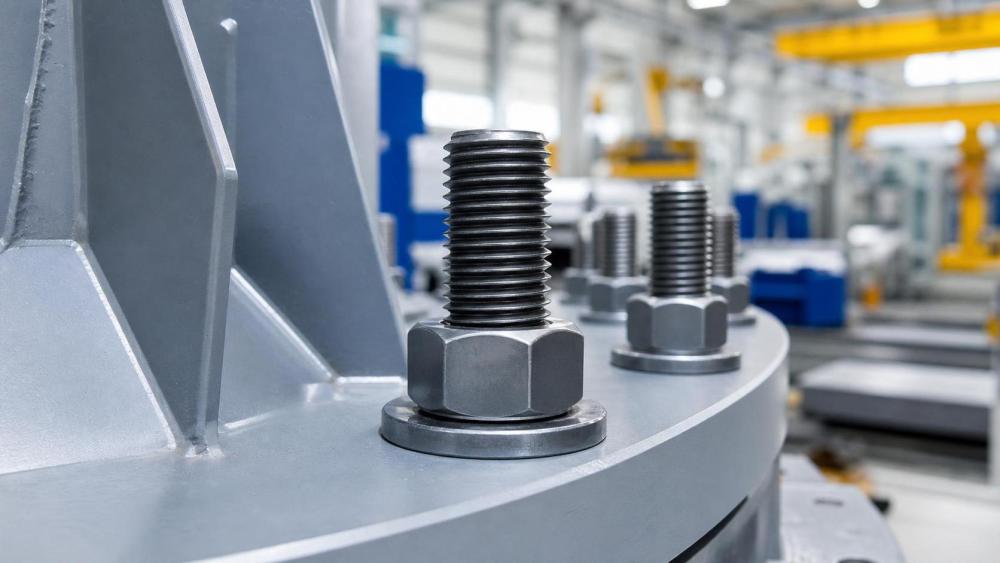
In fatigue resistant structural fastening engineering, small mistakes rarely stay small for long.
A joint may pass initial inspection, then lose preload after months of vibration, heat cycling, and changing loads.
That is why failure analysis must begin before damage appears.
For fatigue resistant structural fastening engineering, the real challenge is managing repeat stress, not just peak force.
Bolts, nuts, washers, inserts, and joint surfaces work as one system.
If one part drifts out of tolerance, the whole connection becomes vulnerable.
From recent field trends, more failures now come from dynamic service conditions than from obvious overload.
This also means inspection plans must move beyond simple torque confirmation.
A stronger approach links design intent, installation control, traceability, and in-service monitoring.
Why Cyclic Loading Defeats Otherwise Strong Joints
Static strength data can be misleading in fatigue resistant structural fastening engineering.
A fastener rated for high tensile load may still fail early under fluctuating stress.
The reason is simple.
Repeated loading creates local stress concentration at thread roots, bearing faces, and transition radii.
Once a crack starts, each cycle pushes it further.
In practice, three conditions accelerate this process:
- insufficient clamp force
- slip between joined surfaces
- poor load distribution across the joint stack
When preload falls, the bolt sees more alternating stress.
That shift is one of the most common hidden triggers in fatigue resistant structural fastening engineering.
Standards such as ISO 898, ISO 16047, VDI 2230, and ASTM guidance help define strength and tightening behavior.
Still, standards only work when the joint is built to match the assumptions behind them.
Risk 1: Preload Loss and Relaxation
Preload loss is often the first failure step in fatigue resistant structural fastening engineering.
It usually happens quietly.
Embedment, gasket compression, coating creep, and surface flattening can reduce clamp load after assembly.
Thermal cycling makes the issue worse, especially in mixed-material joints.
A joint that starts with acceptable torque may end up with poor residual tension.
Warning signs include:
- inconsistent torque-angle results
- washer imprint growth
- joint settlement after early service hours
- unexpected vibration noise or micro-movement marks
The practical response is to verify preload, not just applied torque.
Use calibrated tools, controlled lubrication, and defined friction windows.
For critical joints, audit with load indicating methods or ultrasonic bolt measurement.
In fatigue resistant structural fastening engineering, preload stability matters more than impressive installation torque numbers.
Risk 2: Self-Loosening Under Vibration
Vibration loosening remains a high-priority concern in fatigue resistant structural fastening engineering.
Transverse movement is especially damaging.
When the joint slips sideways, friction under the head and in the threads can no longer hold the assembly stable.
That creates gradual rotation and clamp force decay.
This is where many teams overestimate standard lock washers.
They may help in light service, but they are not universal solutions for severe cyclic loading.
A better control plan may include:
- joint geometry that limits slip
- wedge-locking or prevailing torque devices where validated
- surface preparation matched to friction targets
- Junker-style vibration testing for critical applications
In actual operations, self-loosening often appears first as maintenance drift.
Retorque frequency rises before visible breakage does.
That trend should be treated as a technical signal, not a routine nuisance.
Risk 3: Material Mismatch and Environmental Attack
Material pairing is central to fatigue resistant structural fastening engineering.
A high-strength fastener can still be the wrong fastener.
Galvanic corrosion, hydrogen embrittlement, stress corrosion cracking, and thermal expansion mismatch all shorten fatigue life.
The risk grows in offshore, transport, energy, and heavy equipment environments.
Coatings also need closer review.
Some finishes improve corrosion resistance while changing friction behavior.
Others increase the risk of delayed cracking if process control is weak.
For fatigue resistant structural fastening engineering, review these points before release:
This is one area where supplier documentation must be tested, not simply filed.
Risk 4: Installation Error and Process Variation
Many failures in fatigue resistant structural fastening engineering start on the shop floor.
Cross-threading, reused hardware, damaged bearing surfaces, and uncontrolled lubrication create wide scatter in clamp force.
Even tool calibration drift can change outcomes across production shifts.
More importantly, torque alone is an indirect control variable.
Two joints tightened to the same torque may carry very different preload.
That gap usually comes from friction variation.
To reduce variation, establish a controlled installation route:
- define approved fastener, washer, and lubricant combinations
- use torque-angle or yield-based methods where appropriate
- reject visibly damaged threads and seating faces
- maintain digital traceability for tightening records
- train operators on joint-specific work instructions
In fatigue resistant structural fastening engineering, repeatability is a design control, not merely a production metric.
How to Build a Stronger Inspection and Prevention Plan
A good prevention plan connects design review, incoming inspection, assembly validation, and field feedback.
That is the practical core of fatigue resistant structural fastening engineering.
Start with the highest-risk joints first.
Focus on joints exposed to vibration, thermal cycling, impact, or corrosion.
Then apply a short control sequence:
- Confirm the load path and expected fatigue spectrum.
- Verify fastener grade, coating, and compatibility data.
- Validate tightening method against real friction conditions.
- Test representative joints under service-like vibration or thermal cycles.
- Track field loosening, retorque events, and fracture patterns.
This process makes root causes easier to catch while corrective action is still cheap.
It also improves compliance with customer, industry, and safety requirements.
In the end, fatigue resistant structural fastening engineering is less about one miracle product.
It is about disciplined control of preload, materials, installation, and service behavior.
When those four areas are managed together, structural reliability becomes far more predictable.
That is the clearest path to reducing hidden failure risk in fatigue resistant structural fastening engineering.