
Japan Eases Bolt Quota, Tightens Licensing
On July 1, 2026, Japan adjusted its treatment of aerospace and automotive bolts from China in two directions at once: the annual import quota was removed, while a new pre-shipment licensing requirement was added for high-strength fasteners above 1,200 MPa tensile strength. For exporters, manufacturers, procurement teams, and supply chain coordinators, this is worth close attention because the commercial opening on volume now sits alongside a stricter compliance step for specific product grades.
What Changed on July 1
According to the information provided, Japan’s Ministry of Economy, Trade and Industry (METI) removed the annual import quota on aerospace and automotive bolts from China effective July 1, 2026.
At the same time, METI introduced mandatory pre-shipment licensing for fasteners with tensile strength exceeding 1,200 MPa. The stated basis for this requirement is national security control under the revised Export Trade Control Ordinance.
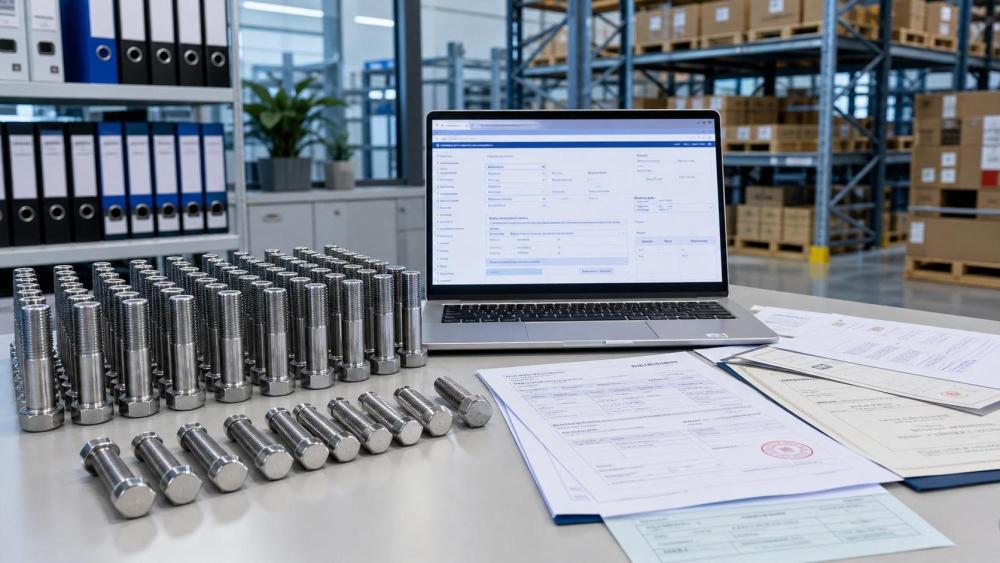
Exporters are required to submit material certification, heat treatment logs, and application forms through METI’s e-Export Portal.
Why the Change Matters Across the Supply Chain
Trade flows may become less constrained, but not uniformly simpler
From an industry perspective, companies directly engaged in cross-border fastener trade may see a more open path for aerospace and automotive bolts that were previously subject to an annual quota. However, that easing does not apply in the same way to all products, because high-strength fasteners above the stated threshold now face a licensing step before shipment.
What deserves closer attention is the split impact: one part of the policy reduces a quantity-based restriction, while another adds a document-driven compliance gate for a technically defined category.
Manufacturing and quality records move closer to the center of execution
For processors and manufacturers, the new licensing requirement makes technical documentation more directly tied to shipment readiness. Analysis shows that material certification and heat treatment logs are no longer only quality records in practice; they also become part of export execution for covered products.
This may affect internal coordination between production, quality, and export teams, especially where tensile strength classification determines whether a shipment falls under the licensing requirement.
Procurement and delivery planning may need earlier checks
For buyers, sourcing teams, and end-use manufacturers in aerospace and automotive supply chains, the key issue is not only product availability but also predictability of lead time. Observably, any transaction involving fasteners above 1,200 MPa tensile strength may now depend on whether the exporter has complete supporting documentation and has completed the required portal submission before shipment.
This means the impact may show up less in product demand itself and more in scheduling, documentation review, and communication between supplier and customer.
Service providers may see a more documentation-heavy workflow
Supply chain service providers, including teams involved in export coordination and shipment preparation, are likely to be affected through process management rather than product demand. The practical issue is whether shipment files clearly distinguish products that require licensing from those that do not, and whether supporting records are complete before cargo handoff.
Where Companies Should Focus Now
Confirm which fasteners fall within the strength threshold
Companies should first distinguish between general aerospace and automotive bolts and fasteners exceeding 1,200 MPa tensile strength. The policy shift is not a single blanket easing or tightening; it introduces different treatment depending on product category and technical specification.
Check whether compliance files are shipment-ready
Analysis shows that material certification, heat treatment logs, and application forms are now operational documents for affected exports, not secondary paperwork. Firms involved in covered shipments should pay attention to whether these records are complete, internally consistent, and ready for submission through METI’s e-Export Portal.
Separate policy signal from shipment reality
What deserves closer attention is the difference between quota removal as a market-access signal and licensing as a shipment-level control. In practical terms, the removal of the annual quota may suggest broader room for trade, but actual execution for higher-strength fasteners still depends on document preparation and approval workflow.
Prepare customer and supplier communication in advance
For commercial teams, procurement contacts, and account managers, it is sensible to clarify early whether specific orders involve products above the threshold and whether licensing-related documents are already in hand. This is less about broad strategy and more about avoiding delivery misunderstandings and last-minute fulfillment disruption.
How This News Is Best Understood
Observably, this development should not be read as a simple liberalization or a simple tightening. It is more appropriate to understand this as a targeted restructuring of control: Japan removed a quota affecting aerospace and automotive bolts from China, while applying stricter pre-shipment oversight to high-strength fasteners defined by tensile performance.
From an industry perspective, the immediate meaning lies in compliance differentiation. The market signal and the control signal are arriving together, and companies will need to track how that balance plays out in actual transaction flow.
Analysis shows that this remains a development worth continued observation rather than a fully settled outcome for all participants, because the practical effect will depend on how consistently the licensing process functions in day-to-day export operations.
What the Market Should Take From This
The industry significance of this update lies in its dual character. On one side, Japan has removed an annual quota on aerospace and automotive bolts from China. On the other, it has introduced a mandatory licensing step for fasteners above 1,200 MPa tensile strength before shipment.
The most balanced reading at this stage is that this is a near-term operational change with a broader policy signal behind it. It affects not only trade access, but also documentation discipline, classification accuracy, and delivery planning for the businesses involved.
Basis of This Article and What Still Needs Verification
This article is based on the user-provided news title, event date, and event summary. The confirmed information used here is limited to the reported July 1, 2026 policy change, the removal of the annual import quota on aerospace and automotive bolts from China, the new METI pre-shipment licensing requirement for fasteners above 1,200 MPa tensile strength, and the stated need to submit material certification, heat treatment logs, and application forms through METI’s e-Export Portal.
For this type of industry update, relevant source categories typically include official government notices, company disclosures, industry association updates, authoritative media reporting, and standard or regulatory documents. A specific official source link was not provided in the input, so further verification remains necessary.
Further attention should remain on any later official clarification, implementation details, or procedural updates related to licensing scope, submission handling, and day-to-day execution.