
Summer Davos Highlights Scalable Innovation Cases
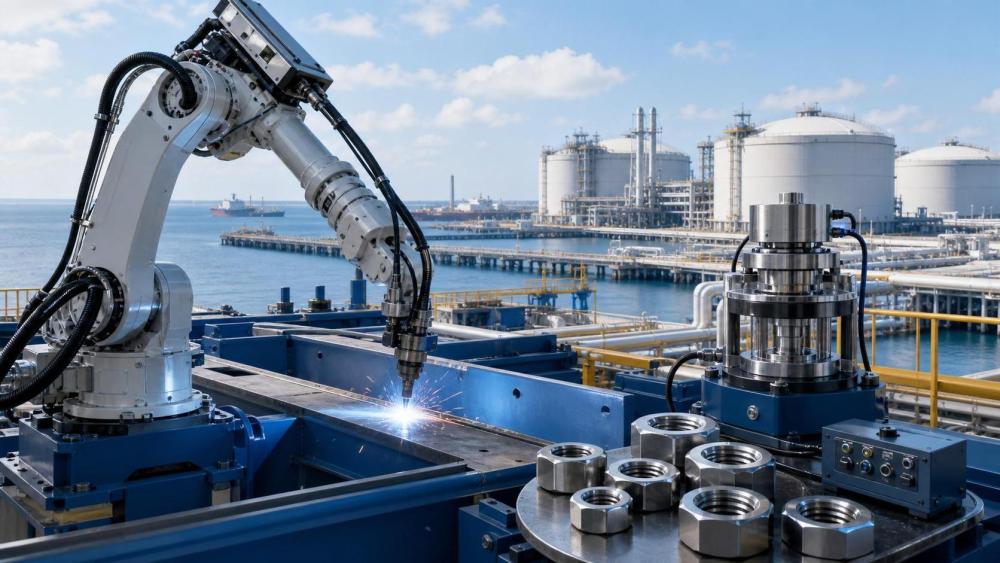
On June 23, 2026, ahead of the June 23–25 Summer Davos Forum in Dalian, two China-linked technologies were identified in official forum materials as benchmark cases of “scalable innovation”: an ocean welding robot and a high-frequency vibration life model for self-locking nuts. For EPC contractors, distributors, end users, and manufacturing suppliers tied to cross-border infrastructure projects, the development is worth watching because it places welding automation and aerospace-grade fastening solutions into a more visible global supply-chain evaluation context rather than treating them only as isolated technical products.
What the Forum Materials Confirm
The confirmed information is limited but clear. The Summer Davos Forum scheduled in Dalian for June 23–25, 2026, lists the “China ocean welding robot” and the “high-frequency vibration life model for self-locking nuts” as representative cases under the theme of scalable innovation. According to the forum materials, these technologies have already been used in multinational projects including Brazil’s pre-salt oilfield developments and an LNG receiving terminal in Vietnam.
The same materials indicate that this recognition signals the formal entry of China’s high-end welding automation and aerospace-grade fastening systems into the mainstream supply-chain evaluation framework for global infrastructure. The stated relevance is especially tied to how overseas EPC firms, distributors, and end users assess the technical maturity of Chinese suppliers.
Why Different Market Participants May Pay Attention
Procurement and EPC review processes may gain a new reference point
Analysis shows that overseas EPC contractors and project procurement teams may be affected first because the forum recognition can become a higher-level reference in supplier screening, technical prequalification, and comparison of equipment maturity. What deserves closer attention is not only the technologies themselves, but also whether procurement conversations begin to place greater weight on independently verifiable engineering application records in multinational projects.
Distributors may need stronger technical translation capability
From an industry perspective, distributors and channel partners may see the impact in customer communication and product positioning. When a welding automation solution or fastening model is associated with global infrastructure case recognition, downstream buyers may ask more detailed questions about application boundaries, reliability logic, and project-fit evidence. For channel businesses, the change is less about marketing language and more about whether they can accurately translate technical maturity into procurement-ready information.
Manufacturers and integrators may face closer scrutiny on delivery depth
Analysis shows that manufacturers, fabricators, and system integrators linked to welding automation or critical fastening systems may face more attention at the execution stage. If buyers increasingly use this type of recognition as an initial filter, the next practical question will be whether suppliers can support documentation, engineering coordination, delivery consistency, and project-specific adaptation in real transactions.
End users may compare maturity, not just price
Observably, end users in infrastructure-related applications may interpret the news as a signal to broaden evaluation criteria. Instead of assessing Chinese suppliers mainly through cost or lead time, some buyers may start comparing field application records, model-based reliability claims, and integration readiness with more discipline. That does not automatically change sourcing decisions, but it can reshape the structure of technical due diligence.
What Companies Should Watch Next
Track how official wording evolves after the forum
What deserves closer attention is whether subsequent official materials, speeches, or summaries maintain the same emphasis on scalable innovation and supply-chain evaluation. Companies should distinguish between a high-level recognition signal and any later operational criteria that may influence qualification or tender communication.
Prepare evidence packages around maturity and application history
For suppliers and service providers, the practical issue is not simply citing the forum case selection. A more useful response is to prepare technical dossiers, project application references already disclosed in official materials, and clear explanations of where a solution fits in offshore, LNG, or other infrastructure workflows. This is especially relevant when overseas buyers ask for proof of engineering maturity rather than product descriptions alone.
Review customer-facing documentation and communication workflows
Analysis shows that commercial teams may need to tighten alignment between technical, sales, and delivery functions. If interest rises from EPC firms or distributors, the pressure point will likely appear in response speed, consistency of technical statements, and the ability to explain qualification, documentation, and delivery scope without overclaiming beyond confirmed facts.
Separate endorsement value from transaction readiness
From an industry perspective, companies should avoid treating forum-level visibility as equivalent to immediate purchasing conversion. A benchmark-case designation may improve credibility in early-stage discussions, but actual transactions still depend on project requirements, customer validation, and execution readiness. Keeping that distinction clear will matter in both external messaging and internal planning.
How This Signal Is Best Understood
Observably, this development is better understood as a high-level industry signal than as proof of a completed market shift. The confirmed facts show that two China-linked technologies have been elevated into a global discussion about scalable innovation and have been tied to multinational project applications. Analysis shows that the broader significance lies in recognition within mainstream infrastructure supply-chain evaluation language, not in any guaranteed expansion outcome that can already be measured.
It is more appropriate to understand this as an indicator of changing perception around technical maturity in selected industrial segments. The market still needs to watch whether that perception leads to more formal qualification opportunities, broader distributor adoption, or deeper inclusion in overseas procurement frameworks.
A Measured Take for the Supply Chain
At this stage, the news matters because it connects Chinese welding automation and intelligent fastening-related capability with a recognized international forum narrative around scalable innovation. For the industry, the most rational reading is that the signal may strengthen credibility in cross-border infrastructure discussions, especially for EPC evaluation, distribution dialogue, and end-user technical review. It should not yet be read as a final outcome, but it is a development that companies across the supply chain would be prudent to monitor closely.
Basis of This Article and Ongoing Verification
This article is based on the user-provided news title, event date, and event summary. The analysis is limited to the confirmed information that the 2026 Summer Davos Forum in Dalian highlighted the two technologies as scalable innovation benchmark cases and that official forum materials referenced their use in projects in Brazil and Vietnam.
For this type of industry update, commonly relevant source categories may include official forum materials, company announcements, industry association releases, authoritative media coverage, and technical or standards-related documents. A specific official source link was not provided in the input, so continued verification remains necessary. Follow-up attention should focus on any later official wording, procurement-related interpretation, and whether additional disclosed project or supply-chain evaluation details emerge after the forum.