
FDA Alert Expands for Uncertified Laser Welders
On July 13, 2026, the US FDA updated Import Alert 99-17 to place CW/Pulsed Laser Systems and handheld laser welding equipment without IEC 60825-1:2024 certification on automatic detention. Because the measure takes effect immediately and applies to exports from all countries of origin, including China, it is directly relevant to exporters, overseas importers, procurement teams, compliance staff, testing-related service providers, and delivery planning across the laser equipment trade chain. What deserves closer attention is that this is not only a product issue but also a clearance and documentation issue that can quickly affect shipment release, inspection costs, and delivery certainty.
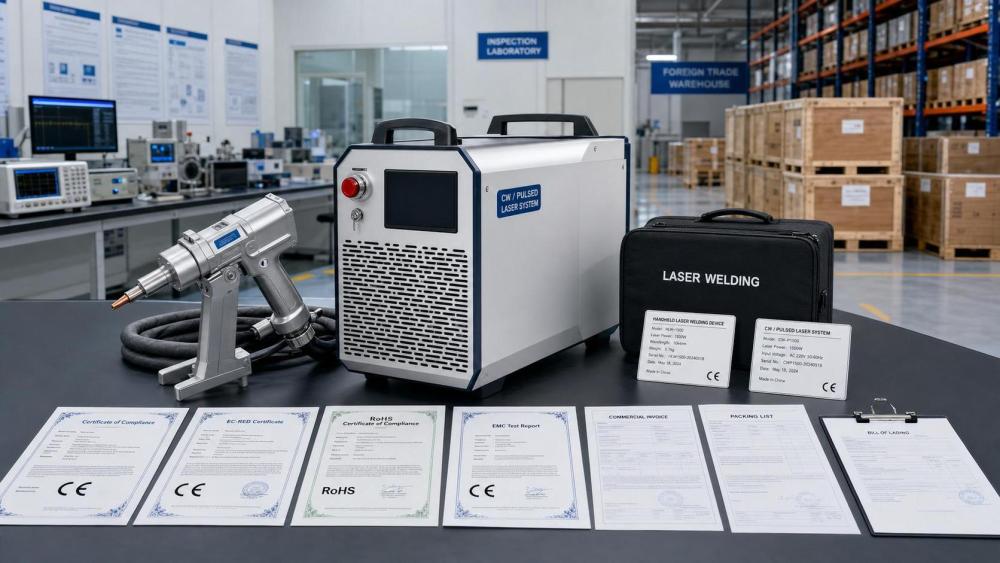
What the FDA update confirms
The confirmed information is limited but clear. The FDA expanded Import Alert 99-17 on July 13, 2026. The updated scope covers CW/Pulsed Laser Systems and handheld laser welding equipment that lack certification to IEC 60825-1:2024. Products within that scope are subject to automatic detention. The rule is effective immediately and applies to exported products from all countries of origin, including China. The event summary also states that overseas importers that continue customs clearance for equipment without compliant labeling may face whole-shipment return, repeated testing, and fines.
Where the pressure is likely to show first
Export shipments may face a stricter pre-clearance threshold
From an industry perspective, exporters of covered laser equipment are likely to feel the change first at the shipment preparation stage. The immediate issue is whether the product can be presented with compliant certification status and labeling before goods move into customs clearance. The business impact is therefore concentrated in export release readiness, supporting documentation, and delivery scheduling rather than in sales language alone.
Importers and distributors carry direct customs exposure
For overseas importers and downstream distributors, the stated risk is more immediate because the event summary directly links non-compliant clearance activity to shipment return, repeated testing, and fines. In practice, this means attention is likely to shift toward document review, product identification, and labeling checks before import procedures continue. For distribution channels, any uncertainty around compliance status can also affect onward inventory planning and customer delivery commitments.
Manufacturers and assembly suppliers may need tighter document alignment
Manufacturing entities and supply partners involved in covered laser systems may be affected through technical file consistency, certification status confirmation, and product marking alignment. Analysis shows that even where production is complete, the trade risk does not end at factory release if the compliance presentation for the destination market is incomplete. This makes coordination between manufacturing, export documentation, and compliance review more important in the near term.
Testing and certification-related service work may become more front-loaded
Certification and testing-related service providers may see increased demand for pre-shipment review, especially where buyers or importers want to avoid detention risk. What deserves closer attention is not the assumption of higher volume as a fact, but the practical shift in timing: compliance evidence may need to be checked earlier in the order and shipping cycle, rather than after goods are already committed for delivery.
What companies should review now
Check whether covered products are being shipped with the right compliance basis
Companies handling CW/Pulsed Laser Systems and handheld laser welding equipment should review whether the products involved in current or pending shipments are supported by certification and labeling aligned with IEC 60825-1:2024. This is especially relevant for goods already in export pipelines, goods awaiting customs clearance, and goods being quoted for near-term delivery.
Recheck shipping files, labels, and technical support documents
Observably, the practical risk in this update is tied not only to the equipment itself but also to the supporting materials that accompany clearance. Firms should therefore pay close attention to labels, technical documents, test-related materials, and any product files used by importers or customs-facing teams. The input does not provide the FDA's detailed execution criteria, so this should be treated as a compliance review priority rather than as a settled checklist.
Adjust procurement and delivery timing where compliance status is uncertain
Buyers, importers, and supply chain coordinators may need to revisit procurement schedules and delivery commitments for affected equipment categories if certification status is still being confirmed. Analysis shows that where shipment return or repeated testing becomes a possibility, the operational impact can extend into receiving plans, installation timing, and replacement sourcing decisions.
Watch for changes in tender language and customer qualification requests
It is more appropriate to understand this as a rule change that may later filter into commercial paperwork. Companies should monitor whether bid documents, purchase specifications, vendor qualification requests, or after-sales acceptance requirements begin to reference IEC 60825-1:2024 certification more explicitly. The current input does not confirm such downstream changes, so this remains a point for continued observation.
How this update is best understood at this stage
Analysis shows that this development is closer to an execution signal than a general policy discussion. The reason is that the import alert update is described as effective immediately and tied to automatic detention. At the same time, it would be premature to treat all downstream market effects as already settled, because the input does not provide detailed enforcement language, review procedures, or market response. For now, the most balanced reading is that the compliance threshold for covered products has moved from a background requirement to an active trade control point.
The immediate takeaway for the market
At this stage, the event is best read as a concrete compliance and customs-risk development for covered laser equipment entering the US market. Its significance lies in how quickly certification status and compliant labeling can affect detention risk, return risk, and delivery reliability. A neutral conclusion is that the update has already taken effect as a trade-facing rule change, while its full operating impact on procurement behavior, documentation practice, and market feedback still needs continued observation.
Basis of this article and points still to verify
This article is generated from the user-provided news title, event date, and event summary. For developments of this type, relevant source categories usually include official announcements, releases from regulatory authorities, customs or trade administration information, industry association notices, standards organization documents, and reporting by authoritative media. A specific official source link was not provided in the input, so the exact source document should still be verified on an ongoing basis. Follow-up attention should remain on any detailed enforcement wording, certification interpretation, tender-document changes, industry feedback, and how companies are implementing the requirement in actual shipment and clearance workflows.