
Handheld Laser Welders: What Causes Inconsistent Weld Seams?
Inconsistent weld seams can quickly turn handheld laser welders from a productivity boost into a maintenance headache. For after-sales service teams, understanding the root causes—from unstable power output and poor parameter settings to surface contamination and operator technique—is essential for fast troubleshooting and reliable customer support. This article breaks down the most common factors behind uneven weld quality and how to address them efficiently.
Why do handheld laser welders produce inconsistent weld seams?
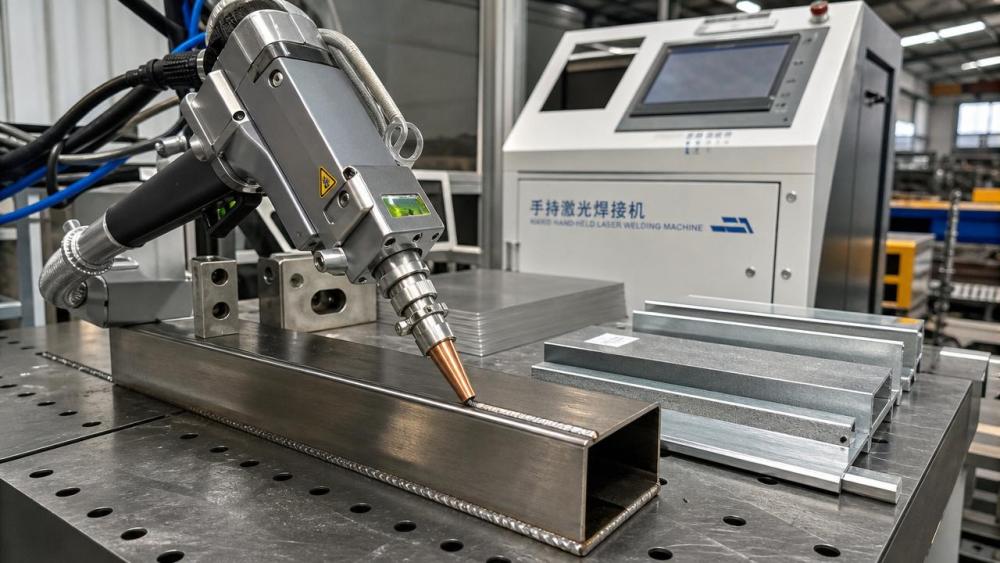
For after-sales maintenance personnel, inconsistent weld seams are rarely caused by a single fault. In most field cases, handheld laser welders show uneven bead width, irregular penetration, underfill, burn-through, porosity, or excessive spatter because several variables drift at the same time. Power source stability, wire feeding coordination, nozzle condition, shielding gas flow, focal position, and operator travel speed all interact within a narrow process window.
This is why troubleshooting handheld laser welders requires more than replacing parts. Service teams need a structured way to separate machine faults from process errors and application mismatch. In mixed manufacturing environments such as sheet metal, fabrication, repair workshops, appliance production, and light structural assembly, seam consistency depends on both equipment condition and the real operating habits of end users.
HTWS follows this issue from the perspective of melt pool thermodynamics, practical maintenance workflow, and production-side constraints. That combination matters. A weld seam that looks unstable on stainless steel kitchen panels may come from a very different root cause than a similar defect on galvanized brackets, battery enclosures, or mild steel cabinets.
- Machine-side factors: laser source fluctuation, optical contamination, cooling inefficiency, wobble head drift, gas path leakage, or wire feeder instability.
- Process-side factors: wrong power range, poor pulse or continuous-wave settings, incorrect spot size, improper defocus, or mismatched wire diameter.
- Material-side factors: oxide layers, oil residue, zinc coating behavior, joint gap variation, reflectivity changes, and inconsistent thickness.
- Human-side factors: uneven hand speed, changing stand-off distance, inconsistent angle, poor overlap at the start-stop zone, or lack of cleaning discipline.
What should after-sales teams check first on handheld laser welders?
A fast first-pass inspection saves service time and avoids unnecessary component swaps. Before opening the machine or suspecting the laser source, maintenance teams should confirm whether the seam inconsistency is repeatable on the same material, joint design, and operator settings. If the problem moves with the operator or workpiece, the root cause is often procedural rather than hardware-related.
The table below helps service engineers prioritize likely causes when handheld laser welders show unstable seam quality in customer workshops.
This type of symptom-based screening is practical in the field because it links what customers see to what service teams can verify quickly. It also supports clearer communication with production managers, who often report “bad seams” without documenting material thickness, gas consumption, or recent parameter changes.
A practical inspection sequence
- Confirm the material grade, thickness, surface condition, and joint type.
- Review the saved process recipe, including power, frequency if applicable, wobble mode, gas flow, and wire feed speed.
- Inspect consumables: protective lens, nozzle opening, contact components in the wire feed path, and gas fittings.
- Perform a short controlled weld on a standard coupon rather than on customer production parts.
- Compare the result across two operators if operator variation is suspected.
Which technical factors most often destabilize weld seam quality?
1. Laser output instability and optical loss
When handheld laser welders begin producing narrow and wide seam sections within the same pass, maintenance teams should consider optical path loss before assuming the laser source has failed. A contaminated protective lens can reduce energy transmission and distort beam quality. If the lens is damaged by back-spatter, the energy footprint changes further, often causing local overheat beside low-fusion areas.
Cooling issues can also destabilize output. If the chiller performance drops or coolant quality degrades, thermal fluctuation may affect process repeatability. In some workshops, dirty ambient air, metallic dust, and poor filter maintenance shorten optical component life faster than expected.
2. Parameter mismatch
Many customers assume handheld laser welders are plug-and-play across all jobs, but the process window changes with thickness, gap condition, coating, and joint geometry. Too much power can create undercut or burn-through on thin material. Too little power can leave cold-lap style defects or shallow penetration. The same applies to travel speed. A fast hand motion may make the bead visually neat but mechanically weak.
3. Shielding gas problems
Gas quality matters more than many end users expect. Incorrect gas selection, excessive flow, insufficient flow, hose leakage, or nozzle blockage can all affect seam color, porosity rate, and oxidation control. For stainless steel, gas instability often appears first as discoloration or rough surface texture before internal porosity becomes obvious.
4. Surface contamination and fit-up variation
Oil, paint, oxide scale, adhesive residue, and zinc coatings create volatile reactions in the melt pool. In service cases involving repair or mixed-batch fabrication, this is a frequent reason why one operator reports good seams while another reports erratic results on “the same” material. Joint gap variation is just as important. Handheld laser welders perform best when fit-up is consistent. A changing gap changes energy demand instantly.
5. Wire feeding and operator motion
On filler-assisted jobs, wire feed rate must remain synchronized with heat input and travel speed. If the wire pushes unevenly or slips, the bead profile will pulse. At the same time, the handheld nature of the process means operator technique cannot be ignored. Changes in wrist angle, stand-off distance, and seam tracking discipline are common causes of inconsistent weld seams, especially during long shifts or in awkward positions.
How can after-sales personnel separate machine faults from operator or material issues?
A structured comparison method reduces guesswork. Instead of troubleshooting on a live production line, service staff should test the handheld laser welder under controlled conditions. Use one known-clean material coupon, one verified parameter set, and one trained operator. Then introduce only one variable at a time.
The comparison table below is useful when customers insist that the equipment has failed, but the evidence is mixed.
This comparison is especially valuable for multi-site factories. A complaint from one site does not always justify replacing a laser module if another site using the same handheld laser welder configuration is producing stable seams. The decision should follow evidence, not urgency alone.
What parameter settings deserve the closest attention?
For maintenance teams, the goal is not to create a universal recipe. It is to identify which settings most strongly influence seam consistency and whether the customer is operating outside a reasonable range. In most handheld laser welders, the high-impact variables are power, travel speed, focal position, wobble width, shielding gas flow, and wire feed rate when filler is used.
The table below summarizes parameter areas that frequently trigger after-sales complaints and the practical check points that service teams can use during remote support or on-site visits.
These checkpoints help prevent a common support failure: the customer requests a hardware repair when the real issue is recipe drift after a material change, nozzle replacement, or shift turnover. Good after-sales documentation should therefore include not only error logs, but also the last known good parameter window.
Which application scenarios create the highest risk of uneven seams?
Thin stainless steel panels
In decorative or appliance-grade stainless work, customers often focus on surface appearance first. Handheld laser welders can deliver low post-processing seams, but these jobs are highly sensitive to travel speed, oxidation control, and heat concentration. Slight operator hesitation may leave visible color variation or edge collapse.
Galvanized steel and coated parts
Coatings complicate stability because the vaporization behavior affects the melt pool. If seam quality changes unpredictably, service teams should inspect whether the customer is welding directly over coated surfaces without process adaptation. Complaints of spatter or pinholes often emerge here.
Repair work and mixed-batch fabrication
Maintenance departments and job shops often use handheld laser welders across many part families in one day. That flexibility is useful, but it also increases the risk of applying yesterday’s settings to today’s material. Uneven seams in this environment are often caused by poor process segregation rather than by core equipment failure.
Long seams in awkward positions
When parts are large or difficult to access, the human factor becomes dominant. Fatigue, poor line of sight, and unstable wrist support can all affect bead consistency. For these customers, after-sales support should include ergonomic guidance, fixturing suggestions, and realistic expectations about manual process capability.
Common maintenance mistakes that make handheld laser welders seem unreliable
- Replacing expensive assemblies before checking low-cost consumables such as lenses, nozzles, gas fittings, and feeder wear points.
- Testing on random scrap material with unknown coating or contamination, then concluding the machine is unstable.
- Ignoring chiller alarms, coolant age, or ambient dust load, even though thermal and optical conditions directly affect weld seam repeatability.
- Allowing each operator to build personal settings without documenting approved process windows for common applications.
- Treating all discoloration as a power issue when gas shielding, joint cleanliness, or stand-off distance may be the real trigger.
These mistakes are preventable. A disciplined service routine improves both weld seam consistency and customer confidence in handheld laser welders. In many workshops, the machine itself is not the weak link; the weak link is undocumented change.
FAQ: what do maintenance teams ask most often?
Why does the seam look good at the start but degrade later?
This pattern often points to heat buildup, operator fatigue, lens contamination during the run, or gas instability as hoses warm and move. Check whether the problem appears after a fixed weld length, after a consumable change, or only during continuous operation. That pattern can narrow the diagnosis quickly.
Can handheld laser welders handle different metals without frequent seam inconsistency?
Yes, but only if process recipes are separated by material family and thickness. Stainless steel, carbon steel, aluminum, and coated materials do not respond the same way to heat input or shielding conditions. One universal setup usually increases after-sales complaints rather than reducing them.
How often should optics and consumables be checked?
The right interval depends on duty cycle, spatter level, air cleanliness, and material mix. In high-use environments, a brief daily visual check and a more formal scheduled inspection are more reliable than waiting for seam defects to appear. Preventive replacement is often cheaper than downtime and customer scrap.
When should a customer consider a different welding solution?
If the job involves large gaps, heavy structural sections, highly variable fit-up, or production demands beyond manual consistency, robotic arc welding workstations or other automated solutions may be more suitable. Handheld laser welders are efficient, but they are not the best fit for every joint condition.
Why choose HTWS when troubleshooting handheld laser welders?
HTWS approaches weld seam problems from the full chain of industrial connection: laser process behavior, automation trends, consumable logic, structural reliability, and service practicality. That matters for after-sales teams who need answers that work not only in theory, but also in mixed real-world environments where material quality, operator skill, and delivery pressure all collide.
If you are evaluating handheld laser welders, supporting installed equipment, or handling recurring seam-quality complaints, you can consult HTWS for more targeted discussion on the points that affect field performance most:
- Parameter confirmation for specific metals, thickness ranges, and joint forms.
- Product selection advice based on usage intensity, filler wire needs, and workshop conditions.
- Delivery and implementation planning for spare parts, consumables, and service workflow setup.
- Support on common compliance expectations, documentation needs, and application risk review.
- Quotation communication and solution comparison for upgrades, replacements, or process optimization.
When inconsistent weld seams are delaying output, the fastest fix is not always a replacement part. Often, it is a better diagnosis. With the right technical intelligence, after-sales teams can turn handheld laser welders back into a stable production asset instead of a recurring support burden.