
Industrial Welding Technology Pricing: Cost Drivers in 2026
Industrial Welding Technology Pricing in 2026: what is really changing?
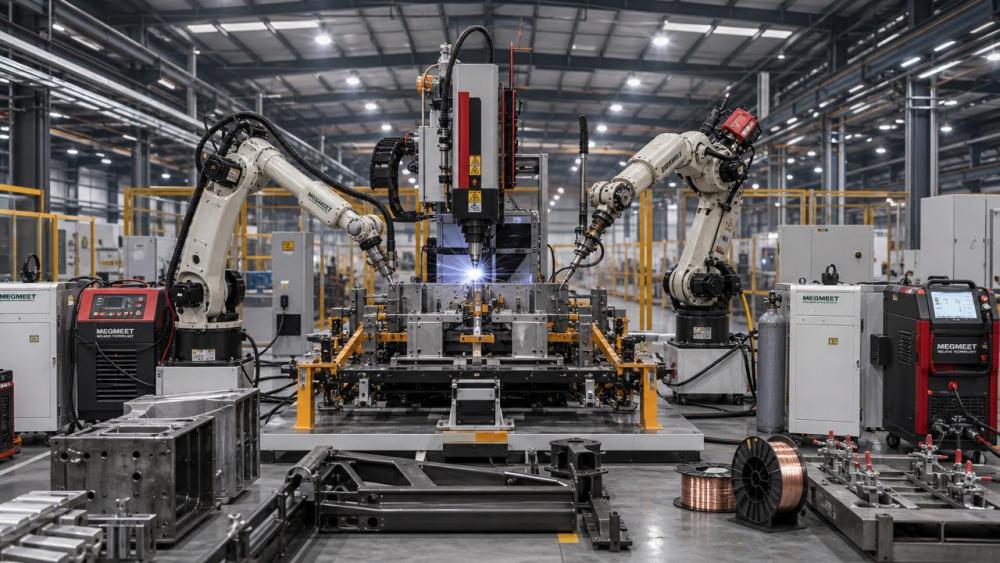
Industrial welding technology pricing is no longer shaped by machine price alone.
In 2026, cost moves come from automation pressure, unstable energy bills, labor shortages, material choices, and tighter compliance rules.
That makes supplier comparison harder, especially across laser welding systems, robotic arc cells, tooling, fasteners, and supporting power equipment.
A lower quote can still lead to a higher ownership cost if uptime, consumables, software, or qualification work are ignored.
This is why industrial buyers increasingly study the full connection chain, not just the welder.
That broader view matches how HTWS tracks the “teeth and joints” of manufacturing.
Its intelligence coverage links welding automation, precision cutting, torque tools, and structural fastening because these systems often shape one another’s economics.
So when people search industrial welding technology pricing, the real question is usually deeper: what drives total cost, and which variables deserve negotiation first?
Why are welding system quotes rising even when competition looks stronger?
More competition does not automatically mean cheaper systems.
In actual sourcing cycles, suppliers are carrying higher component risk, longer validation time, and more software integration work than before.
For laser welding, beam source quality, cooling design, optics durability, and safety enclosure requirements can move price quickly.
For robotic arc systems, servo precision, seam tracking, positioners, and offline programming licenses often explain the premium.
Another hidden factor is project complexity.
A standard machine may look affordable, but once it must fit mixed materials, difficult joints, traceability rules, and plant data systems, industrial welding technology pricing changes significantly.
Energy volatility also matters more in 2026.
Processes with different power efficiency, duty cycles, and shielding gas usage now create larger operating cost gaps than many quotes first suggest.
A practical way to read a quote is to split it into machine cost, integration cost, qualification cost, and running cost.
This kind of breakdown makes industrial welding technology pricing easier to compare across vendors that use very different commercial structures.
Does laser cost more than robotic arc, or is that the wrong comparison?
It is often the wrong comparison.
The better question is which process delivers the required joint quality at the lowest lifetime cost for the specific part family.
Laser systems usually need a higher initial investment.
However, they can reduce distortion, post-processing, cycle time, and scrap in thin materials or precision assemblies.
Robotic arc cells are often more forgiving for heavy structures, larger gaps, and high-volume steel fabrication.
They may also integrate more naturally into sectors like shipbuilding, bridge fabrication, and chassis production.
Still, their long-term cost can rise if consumable use, spatter cleanup, and fixture complexity are underestimated.
A useful comparison usually includes these points:
- How stable is the joint fit-up across batches?
- How much rework follows welding?
- Will distortion affect downstream machining or fastening?
- Is the process easy to scale from one station to multiple lines?
- What level of operator skill remains necessary?
That last point is important because labor cost now influences industrial welding technology pricing almost as much as hardware specification.
In regions facing skill shortages, the value of easier setup, guided software, and traceable process windows has increased.
Which hidden costs tend to surprise teams after the purchase order is signed?
The biggest surprises usually appear outside the headline machine price.
Commissioning delays, fixture redesign, training repetition, and poor spare part planning can distort the business case fast.
Software is another common blind spot.
Some suppliers include only basic functions, while seam tracking, recipe management, data logging, or MES connectivity cost extra.
Then there is the broader process chain.
HTWS often frames welding economics alongside cutting tools, torque tools, and fasteners because poor upstream preparation can make a good welding cell perform like an expensive compromise.
For example, unstable cut edges may increase weld defects.
Weak fastening strategy may force tighter weld quality than the assembly actually needs.
That is why industrial welding technology pricing should be judged inside the production system, not as an isolated capital item.
Before supplier selection, it helps to ask for a realistic cost map:
- Expected annual consumable spend
- Critical spare part lead times
- Calibration and certification frequency
- Operator and maintenance training hours
- Estimated downtime cost per failure event
Those questions often reveal whether a lower initial quote is genuinely competitive.
How can industrial welding technology pricing be compared fairly across suppliers?
A fair comparison starts with one rule: normalize the scope.
Suppliers often quote different boundaries for safety systems, tooling, installation, fume extraction, and software support.
Without a common scope sheet, the cheapest bid may simply be the least complete one.
A practical approach is to compare offers through a weighted decision table.
This method also helps when comparing global brands with regional specialists.
A larger brand may price higher but provide stronger process libraries and service depth.
A regional player may respond faster and customize more flexibly.
The right choice depends on how much technical uncertainty exists in the application.
What signals suggest pricing will move again during 2026?
Several signals deserve close tracking.
Rare metal price swings can affect laser sources, optics, coated tools, and electrical components.
Trade restrictions on industrial consumables may raise delivered cost even when base equipment prices stay flat.
Labor inflation remains another strong signal, especially for service-heavy systems requiring installation and on-site process tuning.
There is also a technology signal to watch.
As more factories push toward dark-factory welding and traceable tightening, software and sensor content continue rising across the hardware stack.
That means industrial welding technology pricing may climb even if basic hardware becomes more standardized.
HTWS follows these movements through its Strategic Intelligence Center, where welding science, machining expertise, and fastening analysis are treated as connected cost signals.
For sourcing decisions, the value is not just seeing prices change.
It is understanding why they change, which categories are exposed, and which contracts should lock pricing sooner.
So, what is the smartest next step before requesting final offers?
Start by defining the production reality in measurable terms.
That includes material mix, annual volumes, acceptable defect rate, available labor, target uptime, and required compliance documentation.
Then build a comparison file that separates capital cost from operational cost.
This keeps industrial welding technology pricing from being reduced to a single number that hides risk.
It also helps connect welding choices with nearby decisions in cutting, fastening, and powered assembly.
The strongest sourcing outcomes usually come from three actions:
- Request line-item transparency for integration, software, training, and spare parts
- Validate sample parts under realistic joint and throughput conditions
- Model ownership cost over three to five years, not only purchase month
In simple terms, the best decision rarely comes from the lowest machine quote.
It comes from matching process capability, lifecycle cost, and supply resilience with the real demands of production.
That is the lens needed to interpret industrial welding technology pricing in 2026 with confidence.