
MIIT Sets AI Weld Inspection Localization Path
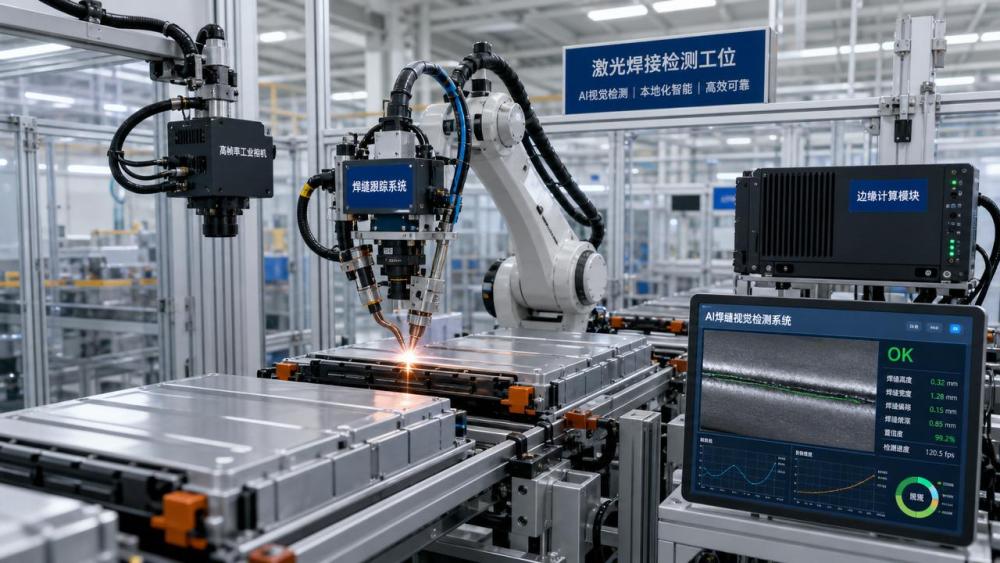
On June 10, 2026, China’s Ministry of Industry and Information Technology released an action outline under its “AI + Information and Communications” development agenda, putting AI-based laser weld inspection systems on a priority localization list and setting a 2027 penetration target of more than 80% for new energy vehicle and energy storage battery production lines. For suppliers, buyers, and service providers linked to seam tracking systems, high-frame-rate industrial cameras, and edge computing modules, the update matters less as a general technology signal and more as a procurement and compliance signal that could reshape sourcing decisions, technical specifications, and delivery planning.
What the policy text clearly changes
The confirmed information is limited but commercially significant. The MIIT action outline released on June 10, 2026 identifies “laser weld AI vision inspection systems” as a priority category for domestic substitution. It also states that production lines for new energy vehicles and energy storage batteries are expected to achieve penetration of more than 80% by 2027.
The event summary further indicates that this policy is accelerating import substitution demand for seam tracking systems and related high-frame-rate industrial cameras and edge computing modules. It also indicates that European and U.S. suppliers are facing a narrowing decision window in procurement discussions with Chinese customers.
Where pressure may appear across the supply chain
Technical procurement is likely to tighten first
From an industry perspective, equipment buyers and production-line integrators may be affected first because localization priorities often flow into technical bid alignment, approved vendor screening, and specification review. The immediate issue is not only whether a system can perform weld inspection, but whether procurement documents begin to favor domestic substitution pathways for core subsystems and integration architecture.
What deserves closer attention is the possible shift in tender language, qualification requirements, and technical documentation requests. Buyers may need to review whether imported cameras, edge modules, or seam tracking components remain acceptable under internal sourcing rules once localization targets are reflected in project execution.
Imported component suppliers face a shorter sales cycle window
For overseas suppliers of seam tracking systems and related modules, the pressure may show up in pre-sales and order conversion rather than in an immediate legal prohibition. Analysis shows that if customers interpret the policy as a strong implementation signal, imported products could face earlier scrutiny during vendor qualification, local service assessment, and long-term supply planning.
These suppliers may need to pay closer attention to product dossiers, technical compatibility files, quality records, and after-sales support commitments, because procurement reviews may increasingly ask whether imported components can still fit localization-oriented project requirements.
Manufacturing and delivery teams may need earlier coordination
Processing and manufacturing businesses connected to new energy vehicle and energy storage battery lines may need to reassess delivery sequencing and replacement planning. If domestic substitution targets begin to influence project milestones, the practical impact may extend to equipment validation, spare-parts planning, and acceptance documentation.
Observably, this does not confirm a uniform execution rule across every project, but it does suggest that manufacturers should watch for changes in plant-level sourcing criteria, inspection acceptance standards, and integration schedules tied to AI-enabled weld quality control systems.
What companies should track from this point
Watch how localization language enters procurement files
Analysis shows that one of the most relevant next steps is whether official or commercial documents begin to translate the policy target into bid clauses, supplier qualification conditions, or project scoring criteria. Companies should monitor tender documents, technical annexes, and customer requirement sheets for wording tied to domestic substitution or local content preference.
Review compliance and technical support materials early
Businesses involved in cameras, edge computing modules, and weld inspection systems should prepare complete technical files, test materials, product specifications, and traceability records for customer review. Since the input does not provide detailed enforcement rules, it is more appropriate to treat this as preparation for possible tighter review rather than as evidence of a finalized compliance checklist.
Recheck delivery plans and supplier qualification status
For procurement teams and supply chain service providers, the practical issue may be timing. If customers shorten decision cycles for import-dependent configurations, vendor approval status, lead-time commitments, and service response capability may become more important in order placement and project scheduling.
Follow later clarification on execution standards
What deserves closer attention is not only the headline target but also any later clarification on implementation wording, acceptance criteria, or category boundaries for related equipment. The current input confirms the direction of policy, but it does not define a complete enforcement mechanism for every product and project type.
Why this reads more as an execution signal than a completed market shift
Observably, this development is best understood as a strong execution signal rather than proof that market substitution has already been completed. The policy direction is explicit in naming a priority category and setting a penetration target, which gives procurement and project teams a clear reference point. At the same time, the available facts do not yet show how different buyers, integrators, or review bodies will translate that direction into detailed qualification, certification, or acceptance practice.
From an industry perspective, the key reason to keep watching is that the commercial effect may emerge through documents and workflows rather than through a single formal restriction. Changes in bid language, supplier shortlists, testing requirements, and delivery acceptance rules would be the more concrete signs of implementation.
How the market should read this stage
This update signals that AI-based laser weld inspection is moving from a technology discussion into a rule-shaped procurement discussion for relevant Chinese production lines. The confirmed facts support closer attention from equipment makers, import-dependent suppliers, and manufacturing buyers, especially where seam tracking systems, high-frame-rate industrial cameras, and edge computing modules are involved.
It is more appropriate to understand this event as a policy-backed direction with near-term commercial consequences, while still leaving room for observation on how detailed execution will unfold. For now, the most rational reading is that the window for import-led procurement decisions in this segment may narrow, but the exact operating rules still require continued verification through later documents and market feedback.
Basis of this article and what still needs verification
This article is generated from the user-provided news title, event date, and event summary. For developments of this kind, commonly relevant source types may include official government notices, regulator releases, trade or customs authority updates, industry association materials, standards organization documents, and reporting by authoritative media.
A specific official source link was not provided in the input, so it still needs to be verified on an ongoing basis. Follow-up attention should remain on detailed policy language, implementation guidance, certification or acceptance interpretation, changes in tender documents, industry feedback, and how companies actually execute procurement and delivery decisions under the stated localization target.