
Laser Cutting Cost Drivers: Material, Speed, and Waste
Why does Laser Cutting cost vary so much from one job to another?
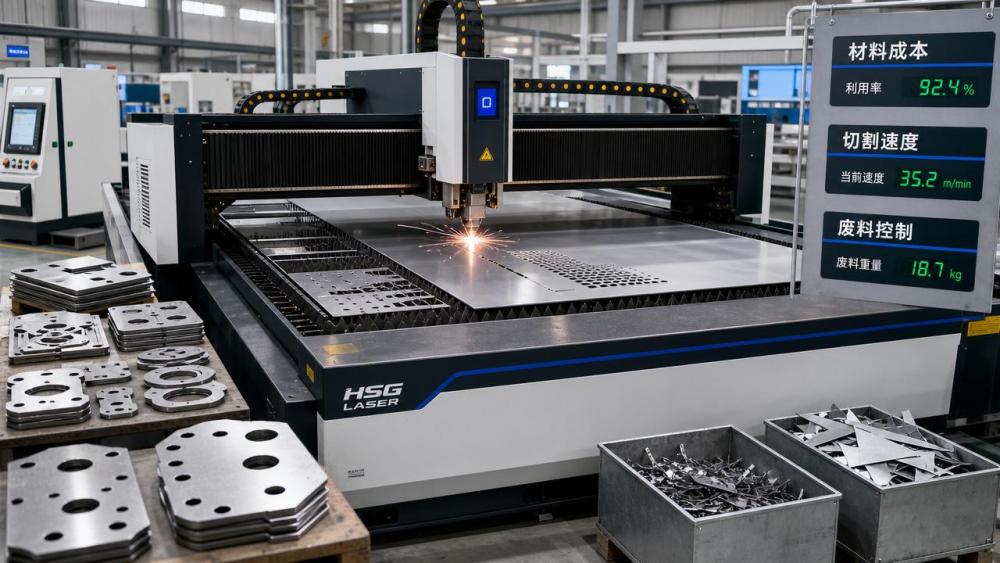
Laser Cutting often looks simple from the outside. A sheet goes in, parts come out, and the quote seems fixed. In practice, the cost structure is more layered.
Three variables usually shape the result most: material, cutting speed, and waste rate. When one of them changes, the other two often move with it.
That is why two parts with similar outlines can carry very different prices. Thickness, alloy behavior, edge quality targets, and nesting efficiency all influence the final number.
Within the broader equipment landscape followed by HTWS, Laser Cutting sits close to welding automation, CNC tooling, and fastening decisions. A cut edge affects later fit-up, welding stability, and assembly precision.
So cost control is not only about getting a lower cutting quote. It is also about protecting downstream quality, cycle time, and structural consistency.
A useful way to read Laser Cutting cost is this: material defines the baseline, speed shapes machine time, and waste decides how much paid stock never becomes a sellable part.
How much does material choice really change Laser Cutting economics?
Material is usually the largest visible cost driver. But the effect goes beyond sheet price alone.
Mild steel, stainless steel, aluminum, copper alloys, and specialty metals behave very differently under a laser beam. Reflectivity, heat conductivity, and required assist gas all change the process window.
For example, aluminum may cut quickly in some gauges, yet it can increase instability, reject risk, and handling care. Stainless often demands cleaner parameter control and edge expectations.
Thicker plate adds another layer. Higher power, slower feed, and more gas consumption raise cost even when the part geometry remains unchanged.
In real production, the question is rarely only, “Which material is cheaper per sheet?” A better question is, “Which material delivers the lowest total fabricated cost after cutting, welding, and assembly?”
This is especially relevant in sectors where HTWS tracks structural strength and joining reliability. A lower-cost sheet can become an expensive decision if it creates poor edge condition or rework in later stations.
A careful quote should therefore connect material type with downstream requirements, not treat stock choice as an isolated purchasing decision.
Is faster always cheaper in Laser Cutting?
Not necessarily. Higher speed lowers machine time, but only if quality remains stable.
Laser Cutting speed depends on power level, nozzle condition, gas settings, material thickness, and contour complexity. Straight lines and open profiles cut differently from tight holes and sharp corners.
A quote based on headline speed can be misleading. Actual cycle time includes piercing, acceleration, head movement, pallet exchange, and occasional parameter changes.
More importantly, pushing speed too far can create dross, taper, heat marks, or unstable edges. That often moves cost from the cutting cell to deburring, scrap, or welding correction.
The better benchmark is stable throughput. That means parts completed per shift at acceptable quality, not the fastest line in a machine brochure.
In high-end fabrication, this balance matters. HTWS often highlights how precision cutting, welding automation, and fastening integrity work as one chain. If speed damages cut consistency, later automation loses efficiency.
- Use programmed cycle time, not theoretical feed rate, when comparing Laser Cutting quotes.
- Check pierce count. Parts with many holes often cost more than simple outer profiles.
- Review edge quality needs before asking for maximum speed.
- Track rework hours. They often cancel any savings from aggressive parameters.
Where does waste creep into Laser Cutting, and why is it often underestimated?
Waste is not limited to leftover sheet corners. It appears in several quiet ways.
The first is nesting loss. If part geometry does not fit efficiently, usable material remains trapped between contours or around the sheet perimeter.
The second is quality loss. A part that fails dimensional or edge requirements becomes scrap, even if the machine completed the cut perfectly from a cycle-time perspective.
The third is planning loss. Ordering oversized stock, running small batches without nesting logic, or changing materials too often can raise waste far beyond the visible offcut pile.
This is why Laser Cutting cost control should include both yield and process discipline. Better programming sometimes saves more money than negotiating a slightly lower sheet price.
A practical review often starts with these questions: Are common parts grouped well? Can grain direction rules be relaxed? Are remnant sheets being reused systematically?
In facilities handling cutting, welding, and assembly together, lower waste also improves flow. Fewer shortages and fewer remake parts reduce pressure on every station after Laser Cutting.
A quick waste check table
The table below helps separate visible waste from hidden cost drivers that are easy to miss during quoting.
What should be compared when evaluating Laser Cutting suppliers or in-house upgrades?
Price per hour is only one piece of the picture. A more reliable comparison blends cost, consistency, and integration with the rest of fabrication.
Start with cut capability by material range and thickness. Then examine repeatability, pierce quality, gas strategy, automation level, and nesting software discipline.
Also ask how Laser Cutting performance is measured. Good operations track usable yield, actual cycle time, scrap rate, and downstream fit quality.
This is where a broader industrial view helps. HTWS covers welding workstations, CNC tools, and structural fastening because fabrication quality is connected. Clean cuts support cleaner joints and smoother assembly torque control.
When comparing options, these checkpoints are usually more revealing than a low initial quote:
- Can the process hold tolerance across mixed batches?
- How often do consumables interrupt production?
- Does the cut edge reduce or increase later finishing work?
- Are remnants, scrap, and gas usage measured transparently?
- Can quoting data be tied back to real production results?
A mature Laser Cutting setup does not just cut faster. It produces predictable cost per good part.
Which cost mistakes show up most often, and how can they be avoided?
One common mistake is treating all metals of similar thickness as equivalent. They are not. Material behavior changes cut speed, gas demand, and reject sensitivity.
Another is assuming a faster machine always lowers Laser Cutting cost. If the edge needs cleanup or remake, the savings disappear quickly.
A third mistake is ignoring waste until month-end. By then, poor nesting habits and remnant loss are already embedded in production cost.
There is also a quoting error that appears in many shops: machine time is counted carefully, while gas, consumables, programming, and inspection are estimated loosely.
A steadier approach is to build a cost review around four numbers:
- Material cost per usable part.
- Actual cycle time per batch.
- Scrap and remnant recovery rate.
- Downstream rework caused by cut quality.
Once those numbers are visible, Laser Cutting decisions become less emotional and more operational. That usually leads to better quotes and fewer surprises.
So what is the smartest next step for reducing Laser Cutting cost?
Begin with one representative part family rather than the entire product mix. Review its material grade, thickness, programmed cycle time, nesting efficiency, and scrap history together.
Then compare quoted assumptions with actual shop-floor results. In many cases, the biggest gap is not sheet price. It is hidden waste or unstable throughput.
If process changes are under consideration, judge them by cost per accepted part and downstream fit quality. That standard is more useful than speed alone.
For teams following the kind of integrated manufacturing intelligence HTWS is known for, Laser Cutting should be reviewed as part of a connected system. Cutting quality influences welding, tooling wear, and final structural reliability.
In short, material sets the cost floor, speed shapes capacity, and waste decides whether margins hold. The most practical move is to measure all three together, then refine quoting and process standards around real production evidence.
That is usually where better decisions begin: clearer specifications, tighter nesting control, and more realistic expectations for Laser Cutting performance.