
How to Evaluate a Heavy Steel Fabrication Contractor
Selecting a heavy steel fabrication contractor is rarely a pricing exercise alone. In large structures, fabrication quality shapes schedule certainty, compliance exposure, rework rates, and long-term maintenance cost. A contractor that looks competitive on paper can still create delays through weak weld control, limited throughput, or poor documentation. That is why evaluation needs to connect workshop capability with real project risk, especially in sectors where structural integrity, cutting precision, fastening reliability, and welding automation directly affect execution.
What a heavy steel fabrication contractor is really responsible for
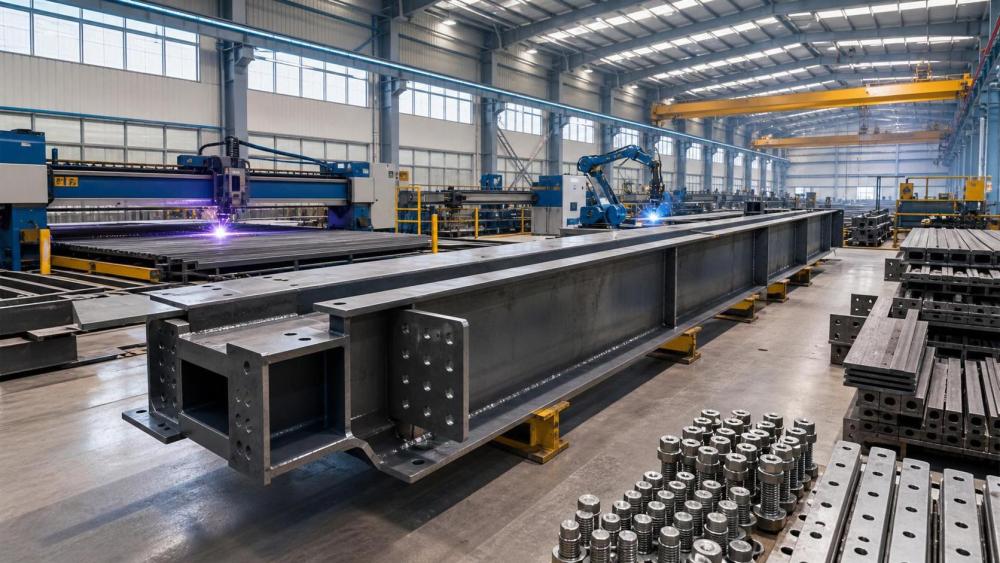
A heavy steel fabrication contractor does more than cut plate and assemble beams. The scope usually covers material handling, CNC cutting, fit-up, welding, dimensional control, surface preparation, testing coordination, and shipment planning.
In practice, this contractor sits between design intent and field installation. If tolerances drift, welds fail inspection, or traceability breaks, downstream erection teams inherit the problem.
That responsibility has grown as projects demand tighter documentation, mixed-material assemblies, and faster delivery windows. Fabrication is now linked to digital nesting, automated welding cells, consumable management, and inspection data.
This is also where broader industrial intelligence matters. HTWS tracks laser and arc welding automation, machining tools, fastening systems, and power tools because heavy fabrication performance depends on all of them working together.
Why contractor evaluation matters more now
Fabrication buyers are dealing with more volatility than before. Steel supply shifts, welding consumable costs, labor shortages, and certification pressure can quickly change delivery reliability.
At the same time, many workshops are investing in robotic arc welding workstations, laser-assisted processes, and smarter torque-controlled assembly tools. Those upgrades can improve repeatability, but only when they are matched by sound engineering control.
A modern heavy steel fabrication contractor should be evaluated in the context of this transition. The question is not whether the shop owns advanced equipment. The question is whether the equipment improves measurable outcomes.
That is especially relevant in bridge sections, ship blocks, offshore modules, plant structures, mining equipment frames, and wind tower components, where weld volume and handling complexity are high.
Start with technical fit, not commercial fit
A capable contractor for one steel project may be the wrong choice for another. Evaluation should begin with process fit between the contractor’s proven work and the specific demands of the job.
Look at the combination of material grade, thickness range, joint type, welding position, tolerance level, coating specification, and transport constraints. These details reveal whether experience is truly transferable.
For example, a heavy steel fabrication contractor experienced in building support frames may not be equally strong in fatigue-sensitive bridge weldments or heavy sections requiring multi-pass procedure discipline.
Ask for recent project evidence with similar geometry, code requirements, and inspection regimes. General claims about capacity are less useful than documented parallels.
Key technical questions to verify
- Which welding processes are qualified for the required material and thickness?
- What is the contractor’s actual plate cutting accuracy and bevel preparation method?
- How are distortion control, preheat, interpass temperature, and sequence managed?
- What dimensional inspection tools are used before release?
- How are bolts, fasteners, and torque records controlled when assembly is included?
The workshop tells you more than the brochure
A site visit remains one of the strongest evaluation tools. It shows whether process flow is stable or chaotic, and whether the heavy steel fabrication contractor can maintain control under production pressure.
During the visit, pay attention to plate storage, identification discipline, edge preparation quality, fixture design, crane coverage, weld station organization, and segregation of completed work.
Well-run workshops usually show traceable material movement and logical routing from cutting to fit-up, welding, inspection, blasting, painting, and dispatch. Disorder often appears first in housekeeping, then in quality escapes.
It is also worth checking whether automation is integrated intelligently. A robotic cell, CNC cutting line, or laser-based process should support throughput and consistency, not become an isolated showpiece.
Quality systems should be visible in daily work
Certification matters, but documents alone are not enough. A reliable heavy steel fabrication contractor turns procedures into routine practice across production, inspection, and release.
The core evidence usually includes WPS and PQR control, welder qualifications, material traceability, NDT coordination, nonconformance records, corrective action history, and final documentation turnover.
Where HTWS coverage becomes useful is in understanding adjacent process strength. Cutting tools, welding systems, power tools, and structural fasteners all influence final quality, especially when assemblies combine welded and bolted interfaces.
If a contractor cannot clearly explain how defects are trended and prevented, quality may still depend too heavily on inspector intervention rather than process control.
A practical review framework
Capacity should mean dependable throughput
Capacity is often overstated because it is presented as floor area or monthly tonnage. A better measure is stable throughput after accounting for handling limits, welding labor, inspection hold points, and painting turnaround.
Ask how the heavy steel fabrication contractor schedules mixed work. High-volume repetitive parts and low-volume complex assemblies compete for the same resources in many shops.
It also helps to review outsourcing exposure. Subcontracted blasting, machining, galvanizing, or NDT may be normal, but every external step adds coordination risk.
Reliable contractors can usually explain where their bottlenecks are. That answer is more credible than a blanket promise of unlimited flexibility.
Past delivery performance deserves close reading
References are useful when they go beyond general satisfaction. Look for evidence on change handling, documentation accuracy, inspection responsiveness, packaging quality, and shipment readiness.
A heavy steel fabrication contractor with strong technical skill can still become difficult if communication is slow or production reporting is vague. Schedule recovery often depends on transparency rather than optimism.
Review whether the contractor uses milestone tracking tied to actual fabrication stages. Progress reporting should be measurable, not based on broad percentage estimates.
This is where digital traceability, tool data, and process records have growing value. They make status discussions more factual and reduce argument around completion claims.
Commercial comparisons need a wider lens
Low bid decisions can become expensive when they ignore repair rates, packaging damage, incomplete dossiers, or site fit-up corrections. Price should be read together with execution assumptions.
When comparing proposals, normalize the basis of quotation. Check inclusions for NDT, machining, trial assembly, surface preparation, transport fixtures, spare fasteners, and final quality records.
It is also useful to test response quality during tendering. Contractors that answer technical clarifications clearly tend to manage fabrication interfaces more reliably later.
Signals that usually deserve extra caution
- Large claimed capacity with little process detail
- No clear evidence of similar code-driven fabrication
- Frequent dependence on emergency subcontracting
- Weak traceability between material certificates and fabricated parts
- Unclear control of welding consumables, fasteners, or torque verification
A disciplined shortlisting approach works better
The most useful way to evaluate a heavy steel fabrication contractor is to score technical fit, quality maturity, production capacity, and delivery behavior before discussing final commercial ranking.
That approach creates a cleaner shortlist and reduces the chance of buying hidden risk. It also makes internal approval easier because the decision is tied to project outcomes, not only purchase price.
Where conditions are complex, it helps to build a review sheet around weld procedures, automation relevance, cutting accuracy, fastening control, traceability, and schedule reporting. These are the points most likely to affect performance after award.
A strong heavy steel fabrication contractor should be able to show how its workshop, systems, and people support the full life of the structure. That is the standard worth using before the next round of comparison begins.