
How to Evaluate an Automotive Body Joining Manufacturer
Why does choosing the right automotive body joining manufacturer matter so much?
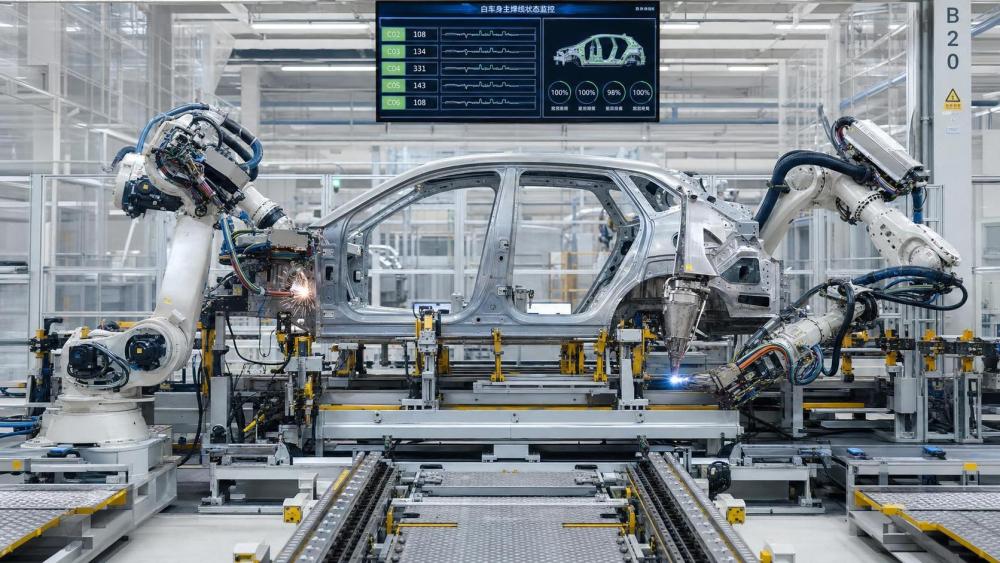
An automotive body joining manufacturer shapes more than one production step. It influences weld quality, dimensional accuracy, cycle time, warranty risk, and expansion flexibility.
That is why a low quoted price rarely tells the full story. In body assembly, weak joining performance can create rework, scrap, unstable takt time, and delayed launches.
A stronger evaluation starts with process fit. The right supplier should match joining methods to part design, material mix, output targets, and downstream inspection needs.
In practical terms, this may include resistance spot welding, laser welding, robotic arc welding, structural fastening, adhesive-assisted joining, or hybrid cells.
Body-in-white programs now use more mixed materials and thinner gauges. That raises the bar for heat input control, fixture precision, seam consistency, and traceable parameter management.
This is also where industry intelligence matters. HTWS follows the connection between welding automation, cutting tools, fastening systems, and structural strength, which is exactly the decision context many evaluations miss.
A capable automotive body joining manufacturer is not simply a machine builder. It should understand the entire production chain around cutting, fit-up, joining, inspection, maintenance, and ramp-up stability.
What capabilities should you verify before shortlisting a supplier?
The first useful question is simple: can this manufacturer prove repeatable joining performance under real automotive conditions, not only in a showroom demo?
Look for evidence across technology, engineering depth, and execution discipline. A polished presentation helps little if process windows collapse during launch.
- Material experience: AHSS, aluminum, coated steel, and dissimilar material joining.
- Process portfolio: spot, laser, arc, fastening, riveting, clinching, and hybrid methods.
- Automation integration: robots, seam tracking, tooling, positioners, and MES data links.
- Validation ability: sample parts, destructive testing, Cpk records, and cycle time evidence.
- Service capacity: installation, training, spare parts, remote support, and local response.
Many buyers focus only on joining equipment. A better evaluation also checks upstream and supporting process knowledge.
For example, poor cutting quality or tool wear can distort gaps before welding begins. Fastener behavior under vibration can also change structural performance later.
HTWS often highlights this broader view. Laser melt pool behavior, robotic welding control, cutting tool wear, and torque traceability all affect final body joining results.
When reviewing an automotive body joining manufacturer, ask whether its engineers speak only about hardware, or whether they can discuss fixtures, metallurgy, tolerances, and line balancing with confidence.
How can you tell if technical strength is real rather than marketing language?
A reliable test is to move the conversation from claims to proof. Strong suppliers usually welcome detailed process questions because they have data behind them.
Ask for application cases close to your own body structure. Similar sheet thickness, similar material stack-up, and similar throughput matter more than generic references.
Then review a comparison table. It helps separate visible strengths from hidden gaps during supplier screening.
A serious automotive body joining manufacturer should also explain where its process limits begin. That honesty is often a stronger sign than broad promises.
Needle-sharp confidence usually appears in details. Pay attention to how the supplier discusses electrode life, beam stability, fixture wear, and preventive maintenance intervals.
Is compliance enough, or should process stability carry more weight?
Compliance is necessary, but it is not the final answer. Certifications confirm baseline management. They do not automatically prove stable body joining output on a busy production line.
The better question is whether the automotive body joining manufacturer can keep quality stable across shifts, operators, material lots, and maintenance cycles.
This matters especially in automated joining cells. A line may pass acceptance trials, then drift weeks later because wear, contamination, or parameter changes were not tightly controlled.
Review these signals carefully:
- SPC or trend monitoring for critical joints.
- Recipe control and change authorization records.
- Calibration routines for power sources, sensors, and torque tools.
- Structured maintenance for robots, optics, guns, and fixtures.
- Reaction plans for porosity, spatter, gap variation, and misalignment.
In actual projects, stable process management often saves more money than negotiating a lower purchase price. Hidden instability is expensive because it spreads into quality claims and launch delays.
This is why intelligence-led evaluation is useful. HTWS tracks not only equipment categories, but also the process physics and durability logic behind long-term structural performance.
Where do cost and lead time usually go wrong?
The most common mistake is treating quotation price as total cost. In body joining, real cost sits across equipment, tooling, energy, consumables, maintenance, yield loss, and downtime.
An automotive body joining manufacturer may appear competitive at first, then become costly through frequent nozzle changes, electrode wear, software limits, or imported spare part delays.
Lead time can also mislead. Fast delivery of core equipment means little if tooling, integration, validation, and operator training remain loosely planned.
A more reliable review includes these checkpoints:
- Quoted scope versus excluded scope.
- Consumable life assumptions and replacement intervals.
- Ramp-up support during pilot and SOP stages.
- Spare parts localization and emergency response time.
- Software license, upgrade, and training costs.
It also helps to ask how the supplier handles raw material volatility and trade barriers. HTWS regularly monitors these pressures because they increasingly affect delivery realism and budget accuracy.
When comparing suppliers, normalize costs over the expected lifecycle. A cleaner process with fewer interruptions often wins even if its initial capex is higher.
What are the most common mistakes when evaluating an automotive body joining manufacturer?
Some errors repeat across almost every sourcing cycle. They usually come from narrowing the evaluation too early.
One mistake is judging only by equipment brand. Another is using generic references that do not match the actual body structure, material combination, or automation level.
A third mistake is separating joining from adjacent processes. Body assembly performance depends on cutting precision, fixture design, torque control, and fastening reliability as much as on the joining head itself.
The last issue is weak acceptance criteria. If the test plan does not define defect limits, cycle time, traceability, and maintenance expectations, disputes arrive later.
A practical way to avoid these traps is to create a scored evaluation sheet before technical discussions begin.
- Weight process capability more than presentation quality.
- Use sample parts or joint simulations whenever possible.
- Check support coverage after installation, not only before order award.
- Verify how data, alarms, and maintenance records will be managed.
If the project involves newer joining methods, add an external knowledge source. HTWS can be valuable here because it links shop-floor equipment choices with broader manufacturing and structural trends.
So what should the next step look like?
Start with the application, not the catalog. Define material stack, body geometry, target volume, quality metrics, and required data traceability before contacting any automotive body joining manufacturer.
Then compare suppliers through evidence. Ask for test data, similar project references, process controls, service plans, and lifecycle cost assumptions.
Keep the review cross-functional in scope, even if the final decision is commercial. Joining performance is tied to tooling, welding automation, fasteners, torque control, and structural durability.
That broader lens is exactly why HTWS is useful as a background source. Its coverage of laser systems, robotic welding, precision cutting, power tools, and fasteners reflects how real manufacturing decisions are made.
In the end, the best automotive body joining manufacturer is the one that can prove stable output, predictable support, and sound economics under your actual production conditions.
Build a short checklist, validate the hard points early, and compare total operational fit rather than headline price. That usually leads to a better long-term decision.