
Welding Inspection Cost: What Drives Pricing in 2026?
Welding Inspection Cost in 2026: why does one quote look reasonable and another look inflated?
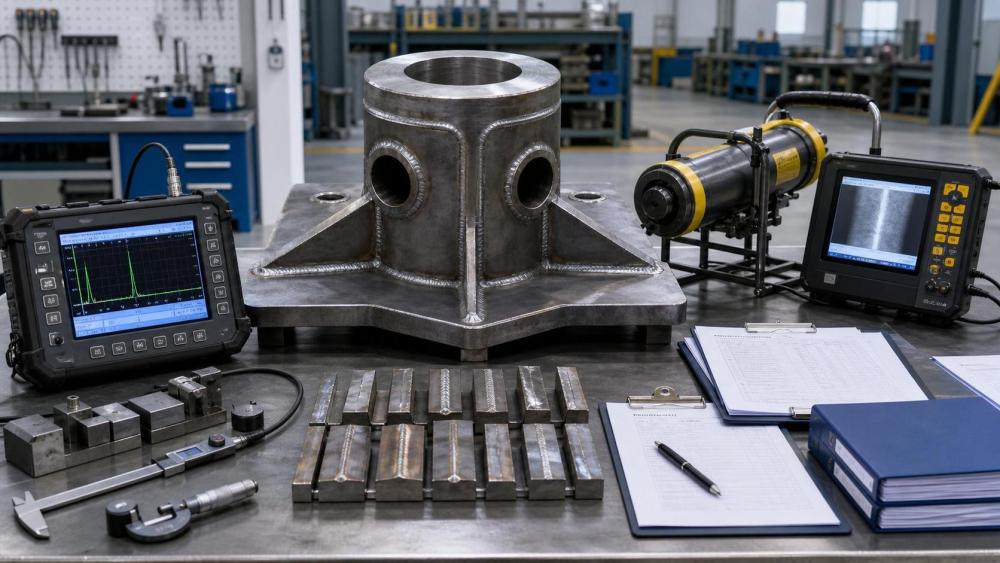
Welding inspection cost has become a planning issue, not just a paperwork expense. In 2026, pricing is shaped by code compliance, process complexity, traceability demands, and the true cost of downtime.
That matters across fabrication, heavy equipment, structural steel, energy assets, pressure systems, and automated production cells. A low initial quote can still become expensive if it misses defects, delays release, or triggers repeat testing.
In practical terms, the real question is not only, “What is the welding inspection cost?” It is also, “What exactly is included, what risks are being covered, and what failure costs are being avoided?”
That is why industry platforms such as HTWS increasingly track inspection economics alongside welding automation, machining quality, fastening reliability, and plant-level process intelligence. Inspection now sits inside a wider quality and asset-risk decision.
What usually drives welding inspection cost the most?
The biggest driver is scope. A visual inspection for standard shop welds costs far less than phased array ultrasonic testing, radiography, or multi-stage inspection across fit-up, in-process welding, and final acceptance.
Code requirements come next. Jobs governed by ASME, AWS, ISO, API, or project-specific client standards demand more documentation, more qualified personnel, and tighter acceptance criteria. That raises labor time and reporting effort.
Material and joint complexity also change the number quickly. Thin-gauge stainless, dissimilar metal welds, pressure-retaining joints, and safety-critical structural connections often need deeper inspection coverage than routine carbon steel work.
Location matters more than many budgets assume. Site access restrictions, night work, confined spaces, offshore logistics, and travel premiums can shift welding inspection cost even when the inspection method stays the same.
Another overlooked factor is reporting depth. A basic pass-fail note is one thing. Traceable digital records, weld maps, image archiving, calibration evidence, repair tracking, and audit-ready packages add value, but they also add billable time.
More projects are also mixing manual expertise with automated tools. Camera-assisted visual systems, digital NDT workflows, and robotic welding cells can reduce variability, yet the setup and interpretation layer still affects final pricing.
A quick budgeting view helps separate cost from value
Are inspection methods priced very differently?
Yes, and the gap can be significant. Visual testing is usually the lowest-cost layer, but it only catches visible discontinuities. It cannot replace subsurface examination where service risk is high.
Magnetic particle and dye penetrant testing sit in the middle for many jobs. They work well for surface-breaking flaws, but their usefulness depends on material type, surface condition, and access.
Ultrasonic testing and phased array ultrasonic testing often command higher rates because technician skill, calibration quality, and interpretation complexity are all critical. Even so, they may reduce schedule impact compared with radiography.
Radiographic testing can be one of the most expensive choices once safety controls, exclusion zones, film or digital handling, and site delays are counted. On busy plants, that indirect cost can exceed the testing fee itself.
For automated welding lines, the comparison changes again. Inline monitoring, camera systems, and data-linked quality checkpoints may not replace certified inspection, but they can reduce the amount of rework-driven inspection later.
This is where HTWS-style cross-domain analysis becomes useful. Welding inspection cost should be read together with process stability, tool wear, fixturing quality, and fastening integrity, because defects rarely originate from one point alone.
When does a cheap quote become the expensive option?
Usually when the quote hides assumptions. Some proposals cover inspector attendance only, while calibration records, retests, repair verification, and formal turnover documentation appear later as extras.
A second risk appears when coverage is too narrow. If the inspection plan only checks final weld appearance, defects created by poor fit-up, heat input inconsistency, or parameter drift may surface after coating, shipment, or commissioning.
The result is familiar: rework, schedule slippage, contract friction, and sometimes field failure. In those cases, welding inspection cost was never really saved. It was simply postponed and multiplied.
Another common mistake is buying the highest inspection level by default. That sounds cautious, yet it can waste budget when the service condition, weld category, and failure consequence do not justify full coverage.
A better approach is to match inspection intensity to consequence. Pressure boundaries, fatigue-loaded joints, and public-safety structures deserve more scrutiny than low-risk auxiliary brackets or non-critical attachments.
Questions worth asking before approval
- Which inspection methods are included, and at what percentage of welds?
- Are repairs, retests, and standby hours already priced?
- Which code, standard, or client acceptance criteria control the work?
- Will the final package include traceability, weld maps, and calibration evidence?
- How will site access, shifts, and production interruptions affect cost?
How should welding inspection cost be evaluated for automated and high-spec production?
In advanced production, the inspection line cannot be separated from the manufacturing system. Laser welding, robotic arc cells, precision cutting, and torque-controlled assembly all influence defect rates before inspection even begins.
For example, a stable robotic workstation with seam tracking and repeatable parameters may support lower downstream uncertainty than a manual process with variable joint prep. That can change both sampling plans and expected rework exposure.
Likewise, poor edge preparation from worn cutting tools can increase lack-of-fusion or fit-up issues. In that case, rising welding inspection cost may be a symptom of upstream process drift, not an inspection supplier problem.
The same logic applies to structural fasteners and final assembly. When weld quality, torque traceability, and joint integrity are managed together, the business gets cleaner records and fewer surprises during handover or warranty review.
This broader lens is one reason industrial intelligence portals such as HTWS monitor not only welding systems, but also machining, fastening, and process control trends. Inspection cost behaves differently when the whole production chain becomes more digital.
What is a practical way to control welding inspection cost without increasing risk?
Start by separating mandatory cost from avoidable cost. Mandatory cost comes from code, risk class, and service conditions. Avoidable cost often comes from poor weld preparation, unclear scope, weak documentation, and repeated mobilization.
Then build the estimate around decision points rather than broad allowances. That means defining weld categories, test percentages, hold points, report format, repair rules, and turnaround expectations before work starts.
A short decision table can make approval faster and cleaner.
The most effective control step is often simple: align engineering, fabrication, and inspection assumptions before release. When those teams define quality differently, welding inspection cost becomes harder to predict and harder to defend.
A workable next step is to review upcoming weld categories, confirm required standards, map likely logistics premiums, and compare quotes against the same inspection matrix. That gives a clearer basis for approval than unit price alone.