
Advanced Machining Technology for Aerospace: 2026 Capability Trends
Aerospace production is entering a phase where machining capability matters as much as design intent. Lighter airframes, heat-resistant engines, and shorter qualification cycles are raising the bar for every cut, bore, and finished surface.
That is why advanced machining technology for aerospace is no longer a narrow shop-floor topic. In 2026, it sits at the intersection of throughput, traceability, material strategy, and long-term manufacturing resilience.
For industrial intelligence platforms such as HTWS, this shift is especially relevant. Aerospace machining now connects directly with tooling science, welding automation, fastening integrity, and data-backed process control across high-end manufacturing.
Why capability trends matter now
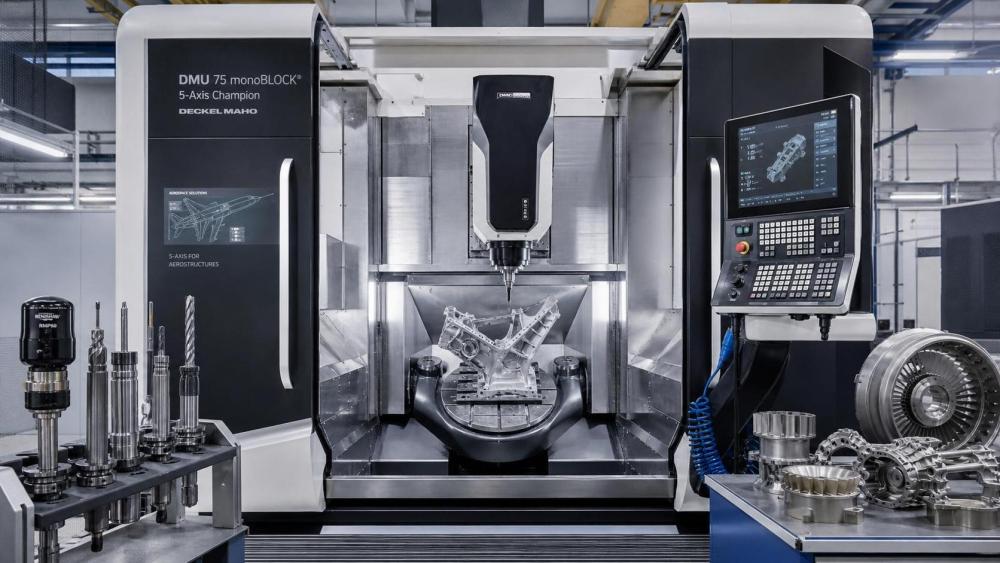
Advanced machining technology for aerospace refers to the integrated methods used to produce tight-tolerance parts from demanding materials under highly controlled conditions.
It includes high-performance CNC platforms, cutting tools for titanium and nickel alloys, thermal management, in-process sensing, digital inspection, and stable downstream assembly compatibility.
The urgency comes from a simple reality. Aerospace parts are getting more complex while acceptable variation is shrinking.
A component that passes dimensional inspection but creates rework in welding, fastening, or final fit-up still weakens productivity. Capability now has to be measured across the full manufacturing chain.
This broader view aligns with the HTWS perspective. Precision cutting tools, robotic joining systems, power tools, and structural fasteners are no longer isolated categories.
They form one physical system of structural quality. Machining decisions influence weld seam consistency, torque repeatability, and final assembly confidence.
The technical baseline is changing
In earlier investment cycles, aerospace machining capability was often judged by spindle speed, axis count, and nominal accuracy. Those metrics still matter, but they no longer tell the whole story.
The 2026 baseline is more demanding. Stability under load, repeatability over long production runs, and confidence in process data are moving to the center of evaluation.
Smarter CNC integration
Modern CNC systems are becoming decision platforms rather than motion controllers. They connect machine status, tool wear signals, workholding conditions, and offset logic into one production picture.
This matters in aerospace because many parts combine thin walls, deep cavities, interrupted cuts, and expensive raw stock. A small instability can become a costly scrap event.
Tooling engineered for superalloys
Advanced machining technology for aerospace depends heavily on tooling science. Powder metallurgy substrates, nano-coatings, edge preparation, and chip evacuation design are now strategic variables.
HTWS has long tracked this area because cutting performance in titanium and aerospace superalloys directly affects cycle time, heat generation, and insert life economics.
Process stability over headline speed
In many aerospace environments, the best process is not the fastest on paper. It is the one that holds tolerances, protects tool life, and reduces downstream variation over weeks of production.
That shift is changing procurement logic. Buyers are placing more weight on predictable capability than on isolated peak-performance claims.
Where the value shows up in real operations
The business case for advanced machining technology for aerospace is not limited to faster cutting. Its value appears in reduced uncertainty across planning, production, quality, and compliance.
A useful way to read this table is to focus on cost of inconsistency. Aerospace production loses margin not only through scrap, but through waiting, retesting, and delayed release.
Advanced machining technology for aerospace helps contain those hidden losses by making output more dependable from the first operation to final assembly verification.
Typical parts and manufacturing contexts
Not every aerospace component stresses the process in the same way. Capability requirements vary by geometry, material, and the assembly route that follows machining.
Structural airframe components
Thin-wall aluminum and titanium parts demand careful vibration control. Distortion, burr formation, and fixture strategy can determine whether mating assemblies fit without corrective work.
Engine and hot-section parts
Nickel-based superalloys challenge thermal control and tool wear management. Surface integrity is critical because subsurface damage can shorten fatigue life or complicate inspection approval.
Fastener-critical interfaces
Hole quality, countersink precision, and edge condition influence clamp force consistency. That links machining directly with high-strength industrial fasteners and smart torque-controlled tools.
Weld-preparation and hybrid assemblies
Machined edges and joint preparation affect laser and arc welding outcomes. Poor consistency upstream can create seam-tracking issues, fit-up gaps, or heat input variation downstream.
This is where the HTWS framework is useful. It treats cutting, joining, and fastening as connected process domains rather than separate equipment purchases.
What should be evaluated in 2026
A sound review of advanced machining technology for aerospace should move beyond machine brochures and test coupons. The stronger method is to examine capability under production-like conditions.
- Check performance on actual aerospace materials, not easier substitutes.
- Review tool wear behavior over a realistic batch size, not one successful sample.
- Validate data capture quality for offsets, alarms, spindle loads, and inspection results.
- Assess compatibility with welding cells, fastening systems, and digital quality records.
- Track consumable risk, including carbide grades, coatings, coolants, and rare metal exposure.
- Compare service depth, application engineering support, and process transfer readiness.
Consumables deserve special attention. HTWS regularly follows rare metal price shocks and trade barriers because they can quickly alter tooling availability and total machining cost.
In practical terms, a capable process is one that still performs when supply conditions tighten, labor becomes less specialized, and certification scrutiny increases.
A broader industrial signal
The rise of advanced machining technology for aerospace also reflects a wider industrial pattern. High-end manufacturing is rewarding systems that combine physical performance with measurable process intelligence.
That is visible in handheld laser welding adoption, robotic arc welding expansion, traceable torque tools, and stronger demand for high-performance CNC cutting tools.
Aerospace simply exposes the pattern more clearly because its materials are unforgiving and its compliance burden is high. What succeeds there often shapes standards elsewhere.
For that reason, monitoring machining capability trends is not only about one sector. It offers insight into where precision manufacturing is heading across the broader equipment landscape.
How to move from interest to decision
The next step is usually not a blanket equipment upgrade. It is a more disciplined comparison of bottlenecks, material mix, tolerance risk, and quality evidence requirements.
Start by mapping which parts create the highest cost of instability. Then compare tooling behavior, machine control depth, inspection integration, and downstream assembly effects.
From there, advanced machining technology for aerospace becomes easier to judge on business terms. The question is not which platform sounds most advanced, but which capability holds performance under real aerospace conditions.
Following sources that connect machining, welding, fastening, and supply intelligence can sharpen that judgment. In 2026, the strongest decisions will come from seeing the whole production chain, not a single machine in isolation.
- power tools
- high-strength industrial fasteners
- structural fasteners
- advanced machining technology
- welding automation
- CNC cutting tools
- industrial fasteners
- arc welding
- precision cutting tools
- Aerospace Machining
- Welding Cells
- Powder Metallurgy
- robotic arc welding
- advanced machining technology for aerospace